
95–98%

Ablation Cure Rate

1–2 hrs

Procedure Time

Same Day

Go Home

Normal

Heart Structure

What is SVT — Explained Simply

SVT stands for Supraventricular Tachycardia. The medical term is technical, but the meaning is simple — and the condition is one of the most successfully treated in all of cardiology.

Supra means above. Ventricular refers to the lower chambers of the heart. Tachycardia means a fast heart rate. Put together, SVT means a fast heart rate that originates from above the lower chambers — that is, from the upper chambers of the heart or the electrical connections between them.

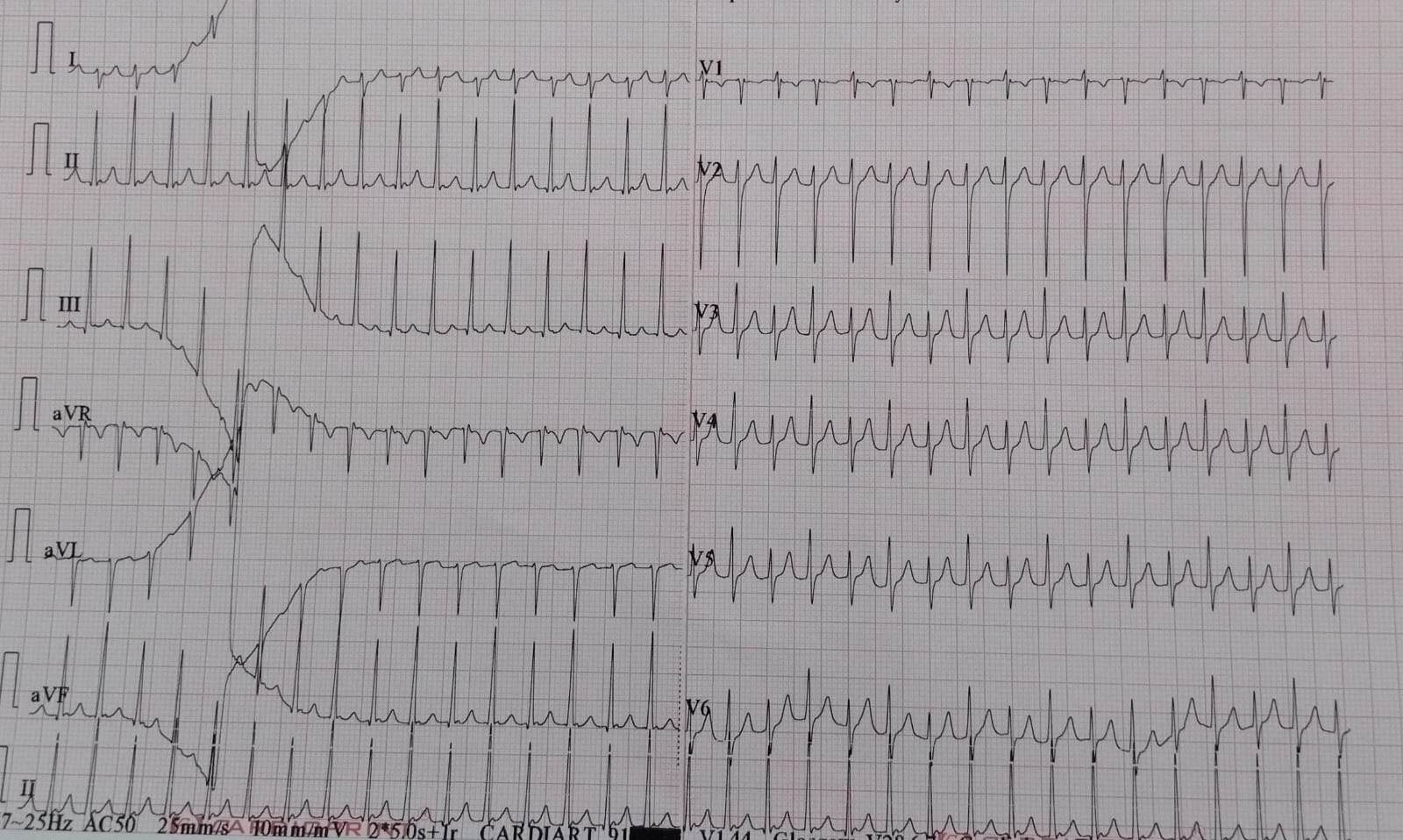
What patients actually feel is this: suddenly, without any warning, the heart starts beating very fast — typically 150 to 200 beats per minute. The episode may last a few seconds, a few minutes, or sometimes longer. And then — just as suddenly as it started — the racing stops, and the heart returns to normal. The hallmark of SVT is its abrupt onset and abrupt termination.

SVT does not mean your heart is weak or damaged. It is a wiring issue — an extra electrical pathway — in a heart that is otherwise normal. It is one of the most successfully treated conditions in cardiology. Catheter ablation cures SVT in 95 to 98 percent of cases.

  • Case in Focus — Concealed Accessory Pathway Ablation

Two Patients. Two Locations. The Same Cure.

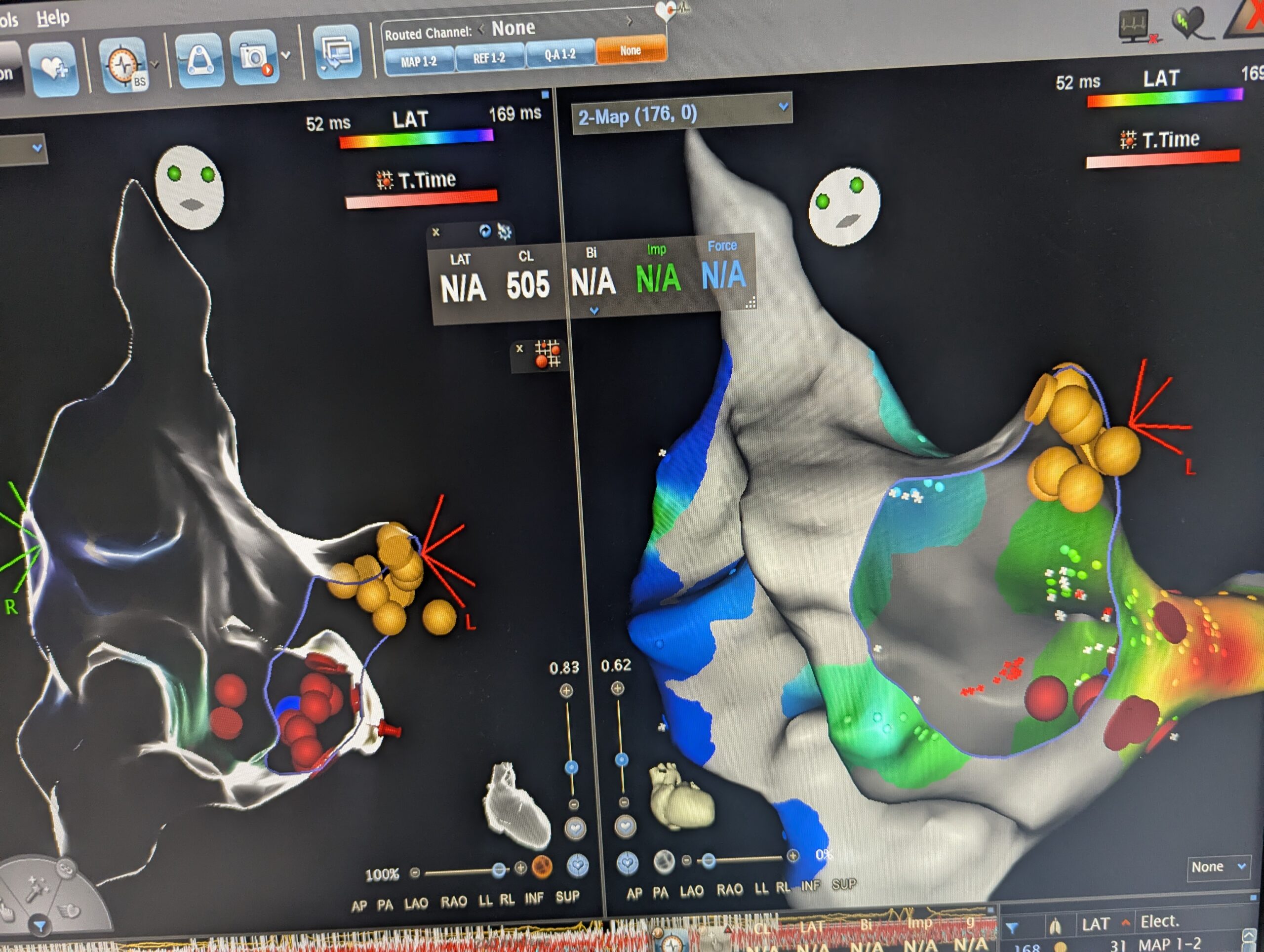
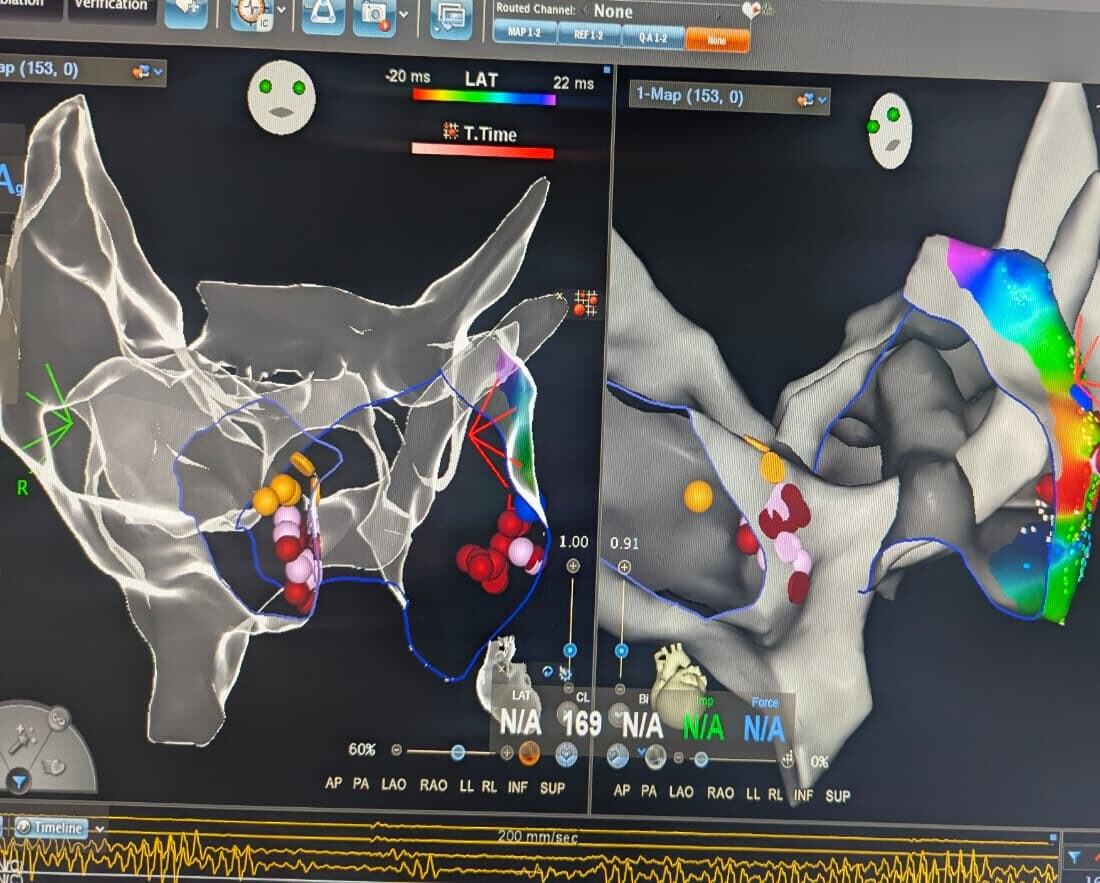
Not all SVTs come from the same place. Some arise from extra electrical connections (accessory pathways) along the mitral valve on the left side of the heart; others from the tricuspid valve on the right. Some pathways are visible on a routine ECG; others — concealed pathways — only conduct backwards and are invisible until specific mapping is performed during the procedure.

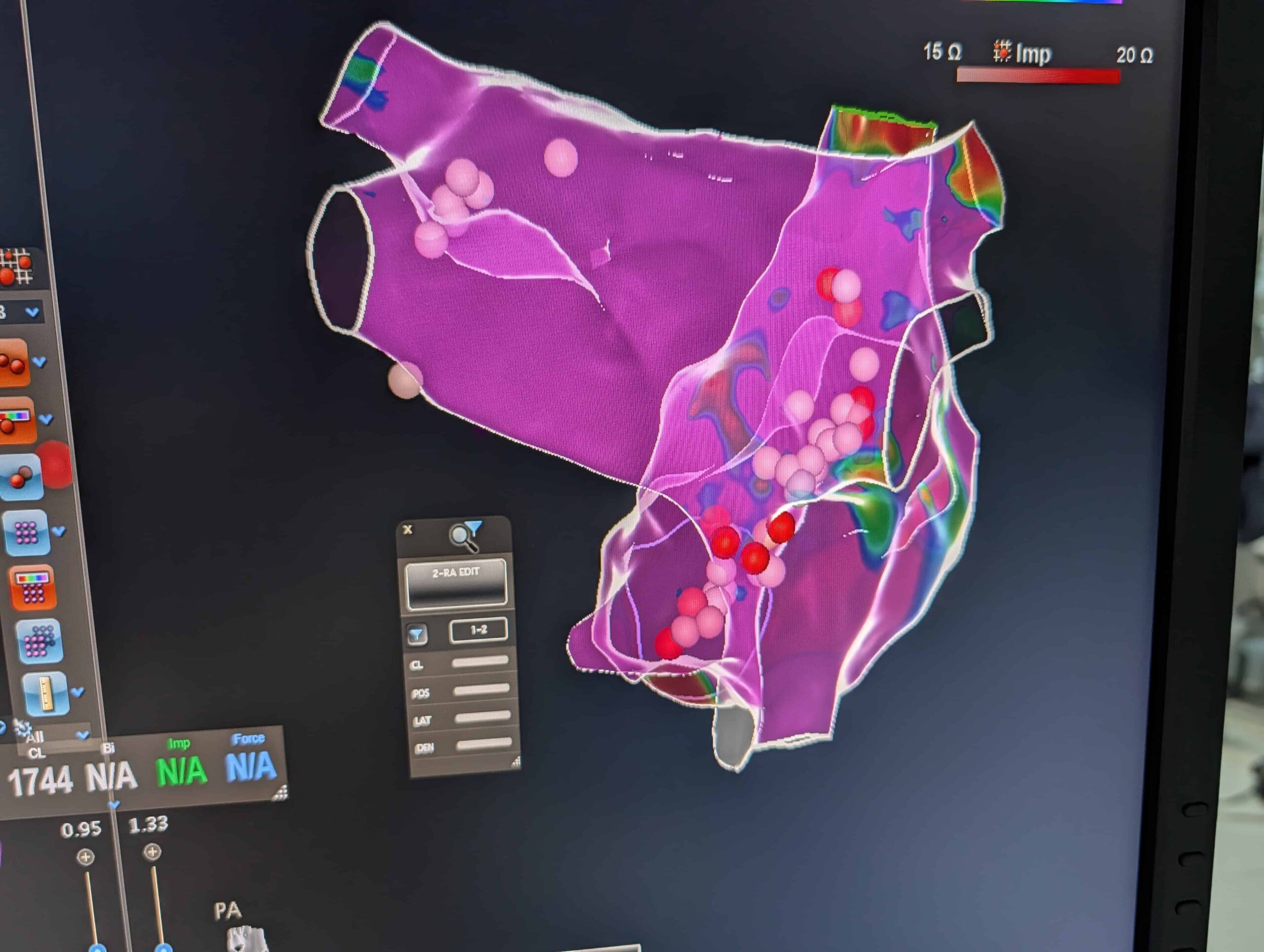
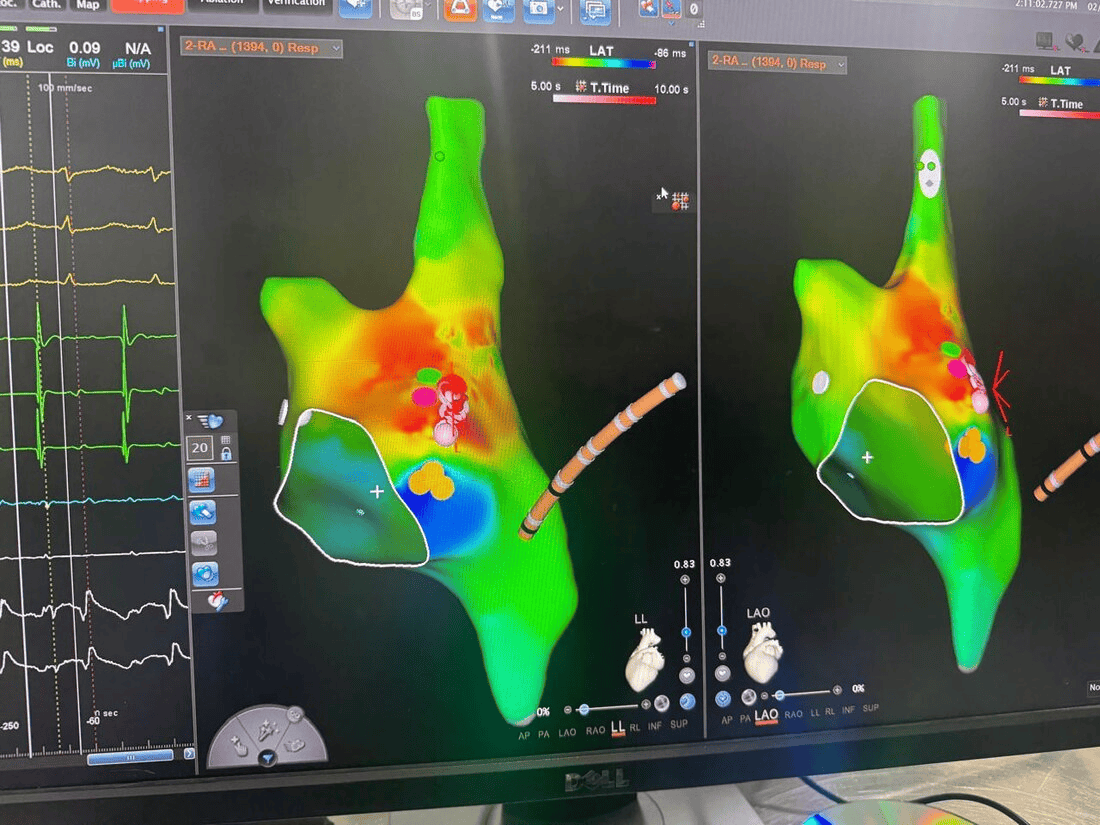
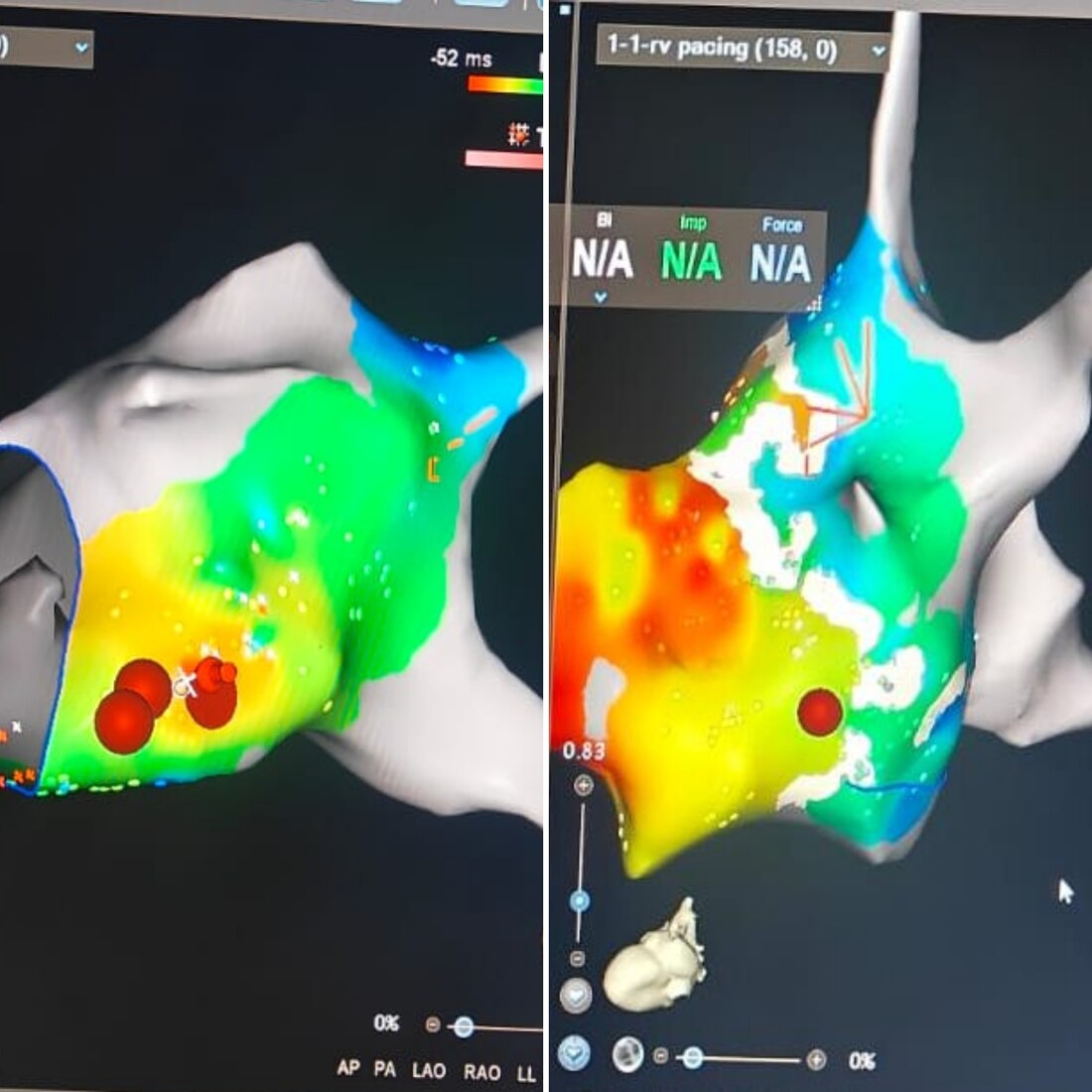
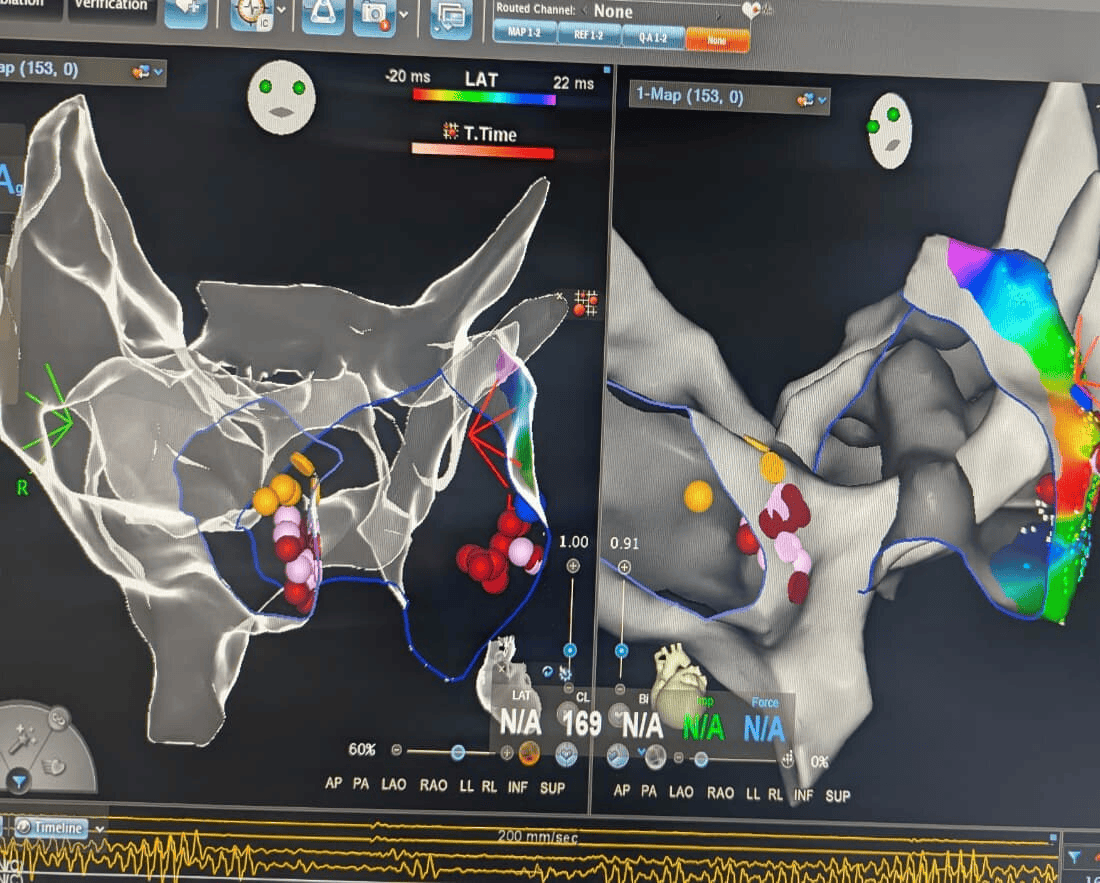
The Carto 3D maps below show two recent SVT ablations at HRHF Clinic — one on each side of the heart — both successfully eliminated.
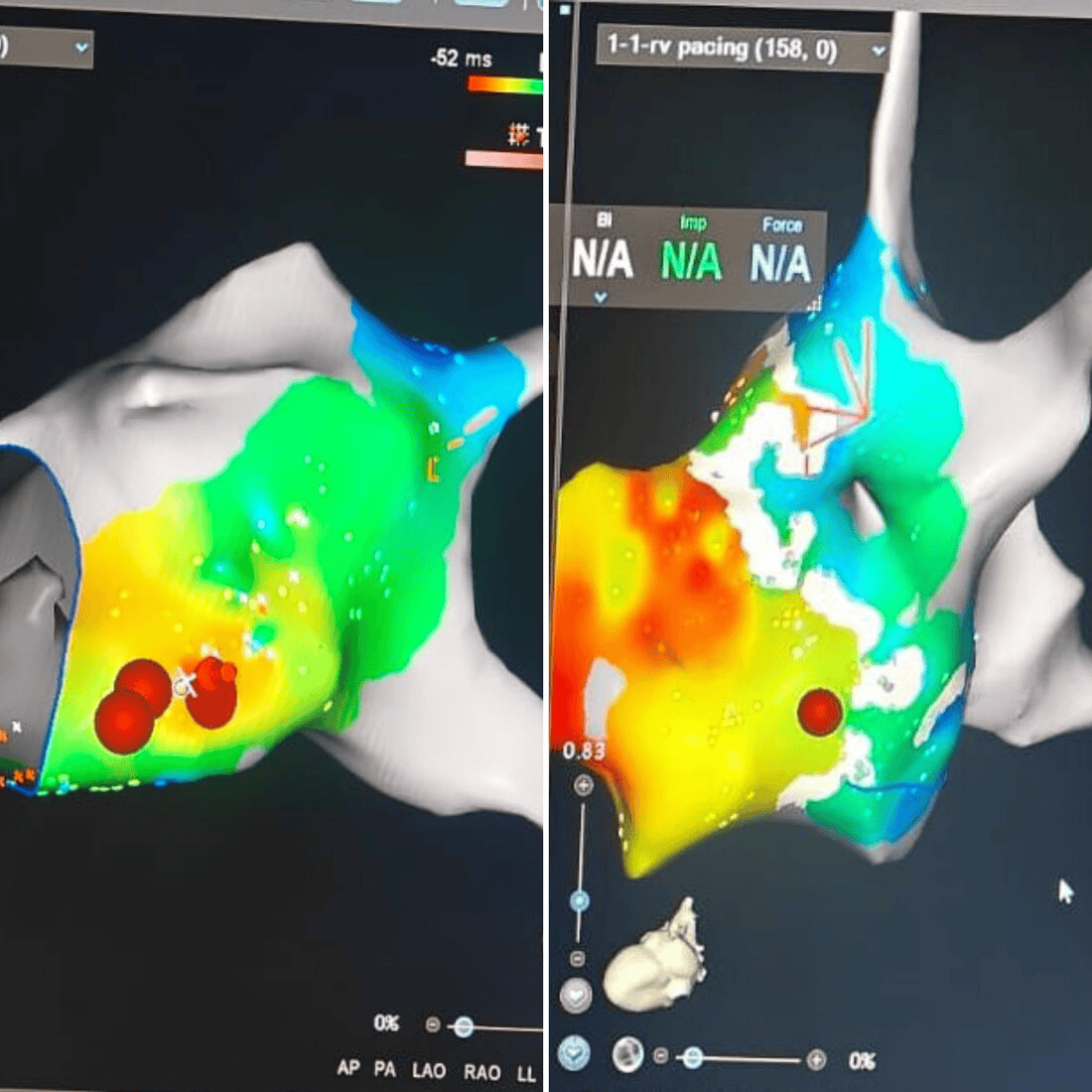
A concealed accessory pathway is one that conducts in only one direction — backwards from the ventricle to the atrium. It does not appear on a routine resting ECG. The pathway becomes evident only during an SVT episode, or when specifically searched for during an EP study. Identifying and ablating these pathways requires high-density 3D mapping with techniques such as open-window mapping during ventricular pacing.

  • Case in Focus — Two SVT Mechanisms in the Same Patient

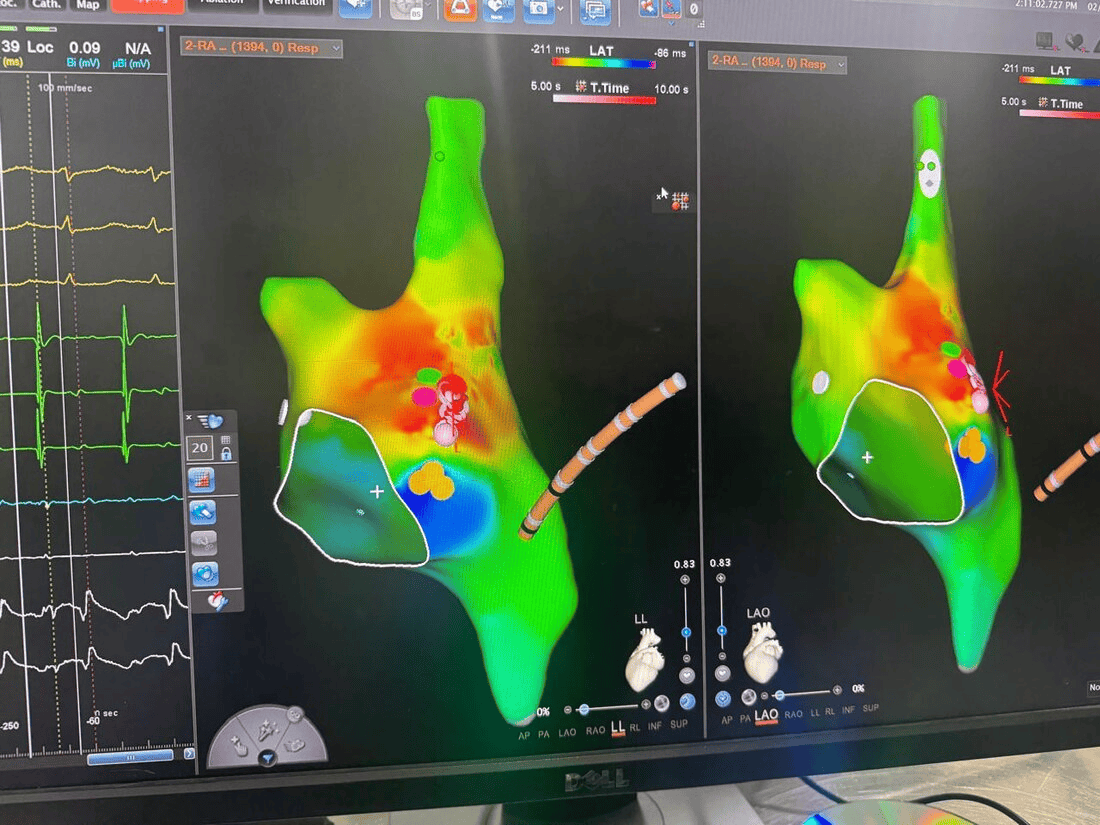
When One Patient Has Two Different SVT Circuits — Both Ablated in a Single Procedure

In some patients, more than one arrhythmia mechanism is present simultaneously. This patient had both AVNRT — the most common form of SVT, arising from a re-entry circuit within the AV node itself — and a separate left lateral concealed accessory pathway creating a second, independent SVT circuit. Without comprehensive EP study and 3D mapping, one mechanism could easily be missed. Both were identified and ablated at HRHF Clinic in the same procedure.
 

The reassurance most VT patients need to hear

In the great majority of SVT cases, the heart muscle is completely normal. The valves are normal. The arteries are clear. What we have is an extra electrical pathway — a small wiring error — that has been there since birth, even though symptoms may not appear until the twenties, thirties, or later. SVT affects approximately 2 to 3 people per 1,000 in the general population. It is common, well understood, and very treatable.

Will SVT Kill Me? Will It Cause a Heart Attack?

These are the questions every SVT patient asks first — and the questions deserve a direct answer. For the vast majority of people with common SVT, the condition is not life-threatening. It will not cause a heart attack. It will not damage your heart muscle. The episode feels frightening because the racing heart, breathlessness, and dizziness are intense — but the danger you fear is not the reality of what is happening.

There is one important exception — a condition called WPW syndrome (Wolff-Parkinson-White), where a specific type of extra pathway can, in rare circumstances, be more serious. This is why every SVT patient should be properly evaluated by a cardiologist or electrophysiologist. Not because SVT is dangerous in general, but because we need to confirm which type you have and ensure you fall into the safe majority. Once that evaluation is complete and the type confirmed, most patients feel substantial relief.

Bottom line: Common SVT is not life-threatening. WPW requires evaluation. The first conversation should not be about prognosis — it should be about confirming which type of SVT you have.

If an Episode Starts — Home Management vs Emergency

Most SVT episodes — even though they feel alarming — do not require emergency care. Knowing when to manage at home and when to seek urgent help is one of the most important things SVT patients can learn.

If an episode starts: stay calm. Panic raises the heart rate further. Sit down, breathe slowly, and try the vagal manoeuvre described below. If the episode stops within 20 to 30 minutes, you do not need to go to emergency — make a note of what happened and see your doctor for evaluation.

  • Manage at Home
  • Episode stops within 30 minutes
  • No chest pain
  • Mildly breathless or just unwell
  • Stable enough to sit and rest
  • Known SVT, previously evaluated
  • Go to Emergency
  • Episode lasting more than 30 minutes
  • Chest pain during the episode
  • Severe breathlessness even at rest
  • Fainting or feeling about to faint
  • First episode ever — get evaluated

What You Can Do at Home — The Modified Valsalva

There is a simple, evidence-based physical manoeuvre you can perform at home that will stop SVT in approximately 40 to 50 percent of episodes. It is called the Modified Valsalva Manoeuvre. It works by stimulating the vagus nerve, which slows electrical conduction through the AV node and can break the SVT circuit.

  • Sit upright in a chair

    Take a deep breath in. Get comfortable. You are about to do something that will feel slightly intense for 30 seconds.

  • Bear down hard for 15 seconds

    Imagine you are straining to lift something very heavy, or straining hard on the toilet. Hold the strain for 15 seconds. This is the Valsalva part.

  • Immediately lie flat on your back

    As soon as you finish the 15 seconds of straining, lie down flat without delay. Speed matters here.

  • Raise your legs to 45 degrees

    Have someone raise your legs to 45 degrees for 15 to 30 seconds. If you are alone, prop your legs up against a wall or piece of furniture.

Watch the Modified Valsalva Demonstration

  • Why the Modified Valsalva Works

The combination of bearing down (which activates the vagus nerve) followed immediately by leg-raising (which increases blood return to the heart) provides a much stronger vagal stimulus than the bearing-down portion alone. Studies show this modified version stops SVT in 40 to 50 percent of episodes — significantly better than the standard Valsalva.

If the manoeuvre does not work the first time, you can repeat it once. If it still does not work and the episode is prolonged, follow the emergency guidance above.

Other manoeuvres: Splashing very cold water on your face — or briefly immersing your face in cold water — also activates the diving reflex and slows the heart. This is a useful backup. Carotid sinus massage is another option, but should only be performed under medical guidance, not at home unsupervised.

Medicines, Adenosine, or Catheter Ablation — Three Approaches Explained

If vagal manoeuvres do not control SVT, or if episodes are frequent enough to disrupt your life, there are three treatment approaches. The right choice depends on the type of SVT, the frequency and severity of episodes, your age, and your personal preference.

Approach What it does
Daily medicines Beta-blockers or calcium channel blockers taken daily can reduce the frequency of SVT episodes. They do not cure the condition — they suppress it. Suitable for patients with infrequent or mild episodes who prefer not to undergo a procedure. Side effects include fatigue, dizziness, low blood pressure, and reduced exercise tolerance.
Adenosine — emergency An intravenous medicine given in the emergency department to break an ongoing SVT episode. Acts within seconds by briefly blocking conduction through the AV node. Patients describe an odd sensation — a momentary feeling of the heart stopping — that passes within seconds. Highly effective for stopping the episode but does not prevent future episodes.
Catheter ablation — curative A minimally invasive procedure performed through a small puncture in the groin. The extra electrical pathway is precisely identified using 3D mapping and eliminated using radiofrequency energy. No surgery. No chest scar. Most patients go home the same day or the next morning. Success rate of 95–98% in expert hands. This is the option that offers permanent cure rather than ongoing management.

Yes — Catheter Ablation Cures SVT in 95–98% of Cases

SVT can be cured permanently — this is not a word used lightly in cardiology, but it applies here. With catheter ablation, we are not managing SVT, we are not suppressing it — we are eliminating the cause. The extra electrical pathway is identified, ablated, and in the vast majority of cases does not return.

For AVNRT — the most common type of SVT — the ablation success rate exceeds 95 percent with very low recurrence. For WPW and other accessory pathway tachycardias, similar results. The procedure typically takes 1 to 2 hours. There is no general anaesthesia — patients are awake but comfortable with sedation. Most people come in the morning and go home the same evening or the next morning.

Patients who have lived with SVT for ten or fifteen years — taking daily medicines, making regular emergency visits — frequently never have another episode after a successful ablation. That is what cure means in this context.

If you are young, or if your episodes are frequent: Consider catheter ablation seriously rather than continuing on lifelong medicines. The decision is personal — there is no urgency for most patients — but for many, the curative option is the better one.

  • 95–98%

    Cure Rate with Ablation

    For AVNRT, AVRT, and WPW in expert hands

  • 1–2 hrs

    Procedure Duration

    No general anaesthesia. Sedation only.

  • Same Day

    Discharge

    Most patients go home the same evening

Is SVT Hereditary?

This is a question parents with SVT often ask. The honest answer is — SVT has a mild genetic component. It does run in families to some degree. But it is not strongly hereditary in the way some other heart conditions are.

Most children of SVT patients do not develop SVT themselves.

  • Watch for Symptoms

    If your child has episodes of sudden racing heart that start and stop abruptly, or if they describe unexplained palpitations, fatigue, or dizziness during exercise, get them evaluated. A simple ECG and a consultation can identify whether they have an extra pathway.

  • No Need for Anxiety

    There is no need to cause anxiety in a healthy child just because the parent has SVT. Watch for symptoms. If symptoms develop, evaluate. If there are no symptoms, no action is needed.

Watch — Everything About SVT, in Conversation with Dr. Dhopeshwarkar

If you would prefer to listen rather than read, the full SVT episode covers everything on this page in a conversational Q&A format. Around 8 to 10 minutes. Watch below — or share it with someone in your family who has SVT and is anxious about it.

When to Come to HRHF Clinic for SVT Evaluation

  • First episode of suspected SVT — to confirm the diagnosis and identify the type
  • Frequent episodes interfering with work, exercise, or daily life
  • Episodes during pregnancy or being planned for pregnancy
  • Anxious about the condition and want a clear explanation of the next steps
  • Already on medicines but episodes continue or side effects are troublesome
  • Considering catheter ablation as a curative option
  • Diagnosed with WPW syndrome — needs specialist evaluation
  • Family member with sudden cardiac death history and palpitations of any kind

Referring Your SVT Patient

SVT ablation is a high-volume procedure at HRHF Clinic. Dr. Dhopeshwarkar performs catheter ablation for AVNRT, AVRT, WPW, atrial tachycardia, and atrial flutter routinely, with over fifteen years of experience. Same working day acknowledgement of all referrals. Direct access for pre-referral discussion.

We particularly welcome referrals of: young patients with documented SVT who would benefit from cure rather than continued medical management; patients with WPW; patients in whom prior ablation has failed; and patients in whom medical therapy is poorly tolerated.

Living with SVT? You don't have to.

Catheter ablation cures SVT in the great majority of patients. If you have been managing episodes for years — or if you have just had your first one — speak to us about whether ablation is the right answer for you.