
Leadless Pacing — A Pacemaker With No Leads, No Pocket, No Chest Scar
A small capsule — or two — placed entirely inside the heart through a vein in the leg. For the right patient, leadless pacing is not a novelty — it is the safer, more durable choice. HRHF Clinic offers the complete range: single-chamber Micra VR, AV-synchronous Micra AV, and true dual-chamber Aveir DR.
National Proctor for Micra and Abbott Aveir DR · Complete Leadless Program
Dr. Rajesh Dhopeshwarkar is a certified national proctor for the Micra AV and Aveir DR leadless pacemaker — one of a small number of physicians in India authorised to train and supervise other implanters. HRHF Clinic has implanted leadless pacemakers since the technology became available in India, with experience across the full spectrum of indications including the most challenging substrates.
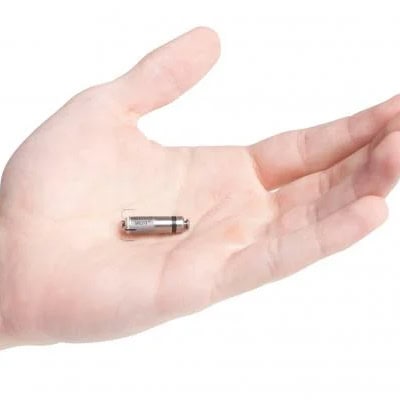
Leadless Pacing is Not for Everyone — It Is the Right Answer for Specific Patients
Conventional pacemakers remain the right choice for most patients. Leadless pacing is transformative for a specific set of clinical situations — where the pocket, the leads, or the vein access of a conventional device carry meaningful risk.
-
Patients on Dialysis / Advanced CKD
End-stage renal disease, AV fistula, or advanced CKD — the leadless pacemaker eliminates pocket infection risk, preserves venous anatomy needed for dialysis access. First-line choice, not alternative.
-
Immunocompromised Patients
Post-transplant, biologics, chemotherapy — eliminating the pocket and leads removes the primary sites of pacemaker infection. Durable, infection-resistant solution.
-
Difficult / Compromised Vascular Access
Central venous occlusion, prior failed leads, congenital anomalies — femoral approach bypasses upper venous access entirely.
-
Previous Pacemaker Infection / Lead Extraction
High recurrence risk with transvenous device. Leadless pacemaker removes substrates that caused original infection.
-
Younger Active Patients
No visible chest bump, no arm restrictions, no recovery limitations. Ideal for athletes, swimmers, and professionals with aesthetic concerns.
-
Frail / Elderly with Thin Skin
Atrophic tissue, chest wall radiation, or erosion risk — leadless avoids pocket complications entirely.
-
AV Block Needing Dual-Chamber Pacing Without Transvenous Leads
Until Aveir DR, patients needing full AV-synchronous dual-chamber pacing could not be offered a truly leadless option. Aveir DR — two wirelessly communicating leadless devices, one in the right atrium and one in the right ventricle — now closes that gap.
When Leadless is NOT the Right Answer
Not appropriate for: patients requiring dual-chamber pacing where AV-synchronous pacing essential but Micra AV insufficient; extensive tricuspid valve disease; unfavourable femoral venous anatomy; severely dilated right ventricles. Decision after echocardiogram and venous evaluation.
Single-Chamber Micra and Dual-Chamber Aveir DR — Matched to the Right Patient
Leadless pacing has evolved from a single device to a complete family of systems. HRHF Clinic offers all current options, matched individually to the patient's rhythm, indication, and long-term needs.
| Device | What it does and who it's for |
|---|---|
| Micra VR (Medtronic) |
Single-chamber leadless pacemaker. Implanted in the right ventricle. For patients in atrial fibrillation with slow ventricular response, or those requiring only intermittent ventricular pacing. The longest clinical experience of any leadless device worldwide. |
| Micra AV / AV2 (Medtronic) |
AV-synchronous leadless pacemaker. Senses atrial mechanical activity through its built-in accelerometer and delivers ventricular pacing synchronised to the atrial contraction — without an atrial lead. For patients with AV block in sinus rhythm who need AV synchrony. The most frequently used leadless device at HRHF Clinic. |
| Aveir DR (Abbott) |
The first true dual-chamber leadless pacemaker. Two devices — one in the right atrium, one in the right ventricle — communicating wirelessly to coordinate AV pacing. For patients who need full dual-chamber pacing but cannot accept transvenous leads. Now available at HRHF Clinic. |
Case in Focus: Micra AV
Micra AV — 70-Year-Old with Renal Dysfunction and High-Grade AV Block
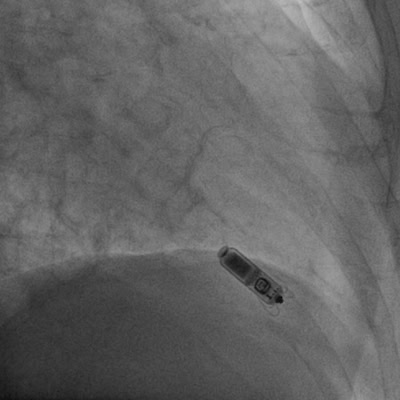
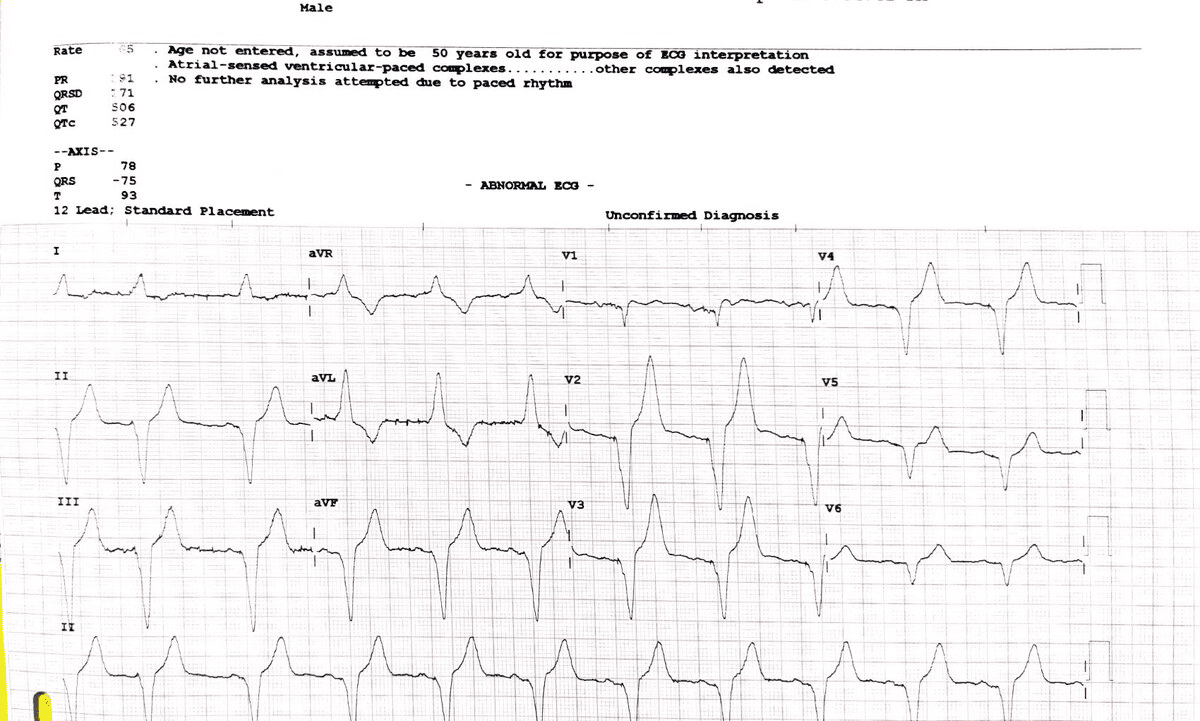
A 70-year-old gentleman with significant renal dysfunction presented with high-grade AV block and presyncope. Conventional dual-chamber transvenous pacing carries elevated risks in this profile — pocket infection in CKD, venous compromise that may interfere with future dialysis access, and the cumulative burden of two indwelling leads. Micra AV was implanted at HRHF Clinic through the femoral vein, anchored at the right ventricular apex, providing AV-synchronous pacing through accelerometer-based atrial sensing. No chest incision. No pocket. Discharged within 24 hours.
Micra AV Deployed
POST-IMPLANT ECG
Case in Focus: Aveir DR
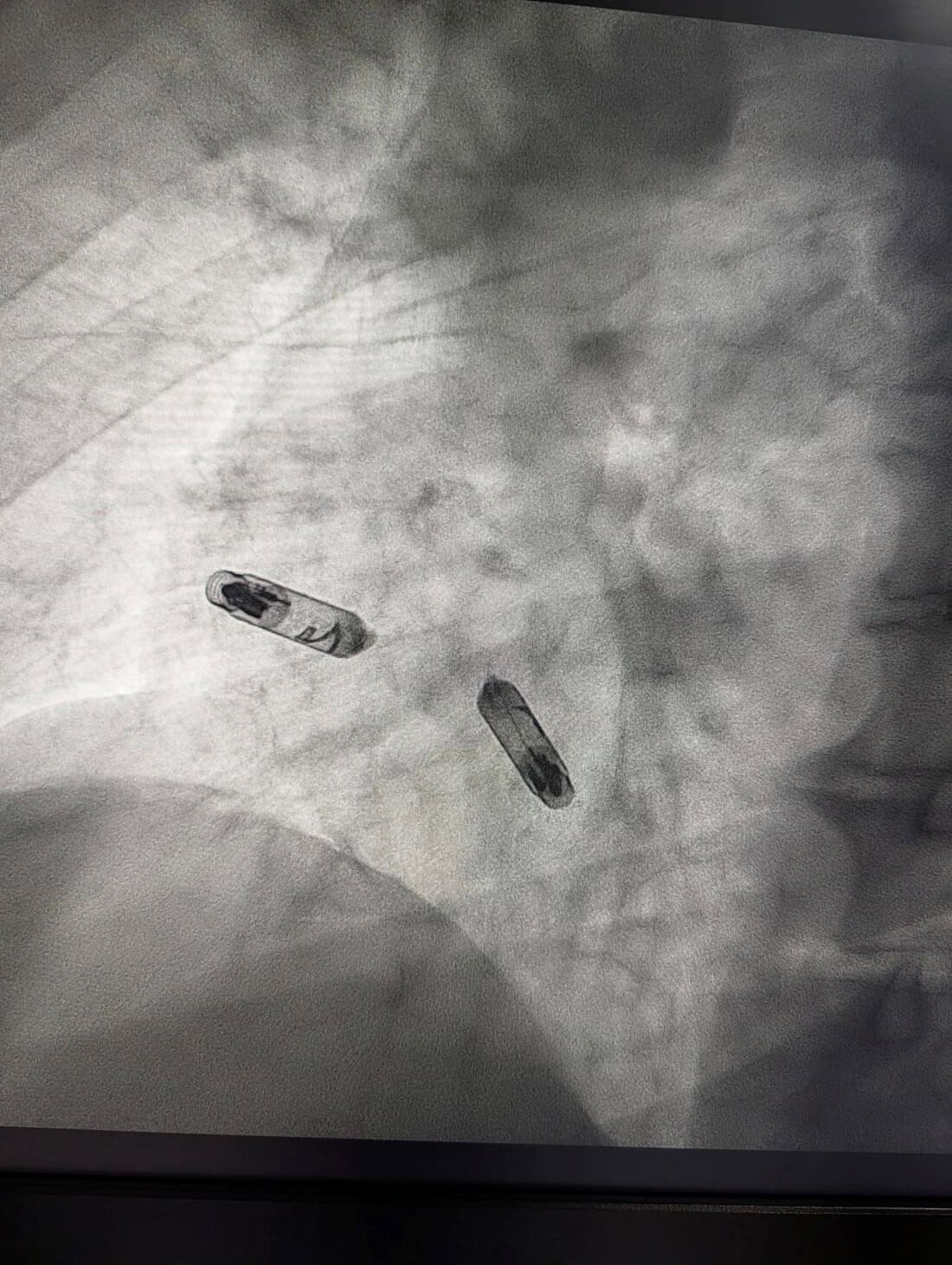
Aveir DR — 65-Year-Old with Intermittent Complete Heart Block and CKD
A 65-year-old gentleman with chronic kidney disease presented with intermittent complete heart block causing syncopal episodes. Full dual-chamber pacing was required — AV synchrony was not optional for this patient. Conventional dual-chamber transvenous pacing in the setting of CKD carries the same elevated infection and venous access risks as any leadless candidate. Aveir DR was the answer — the only system that delivers true dual-chamber leadless pacing. Two wirelessly communicating devices were implanted at HRHF Clinic: the atrial component in the right atrium, the ventricular component in the right ventricle. No chest incision. No generator pocket. No leads. Full AV-synchronous pacing achieved, with the patient’s renal and venous anatomy completely preserved.
Aveir DR Deployed
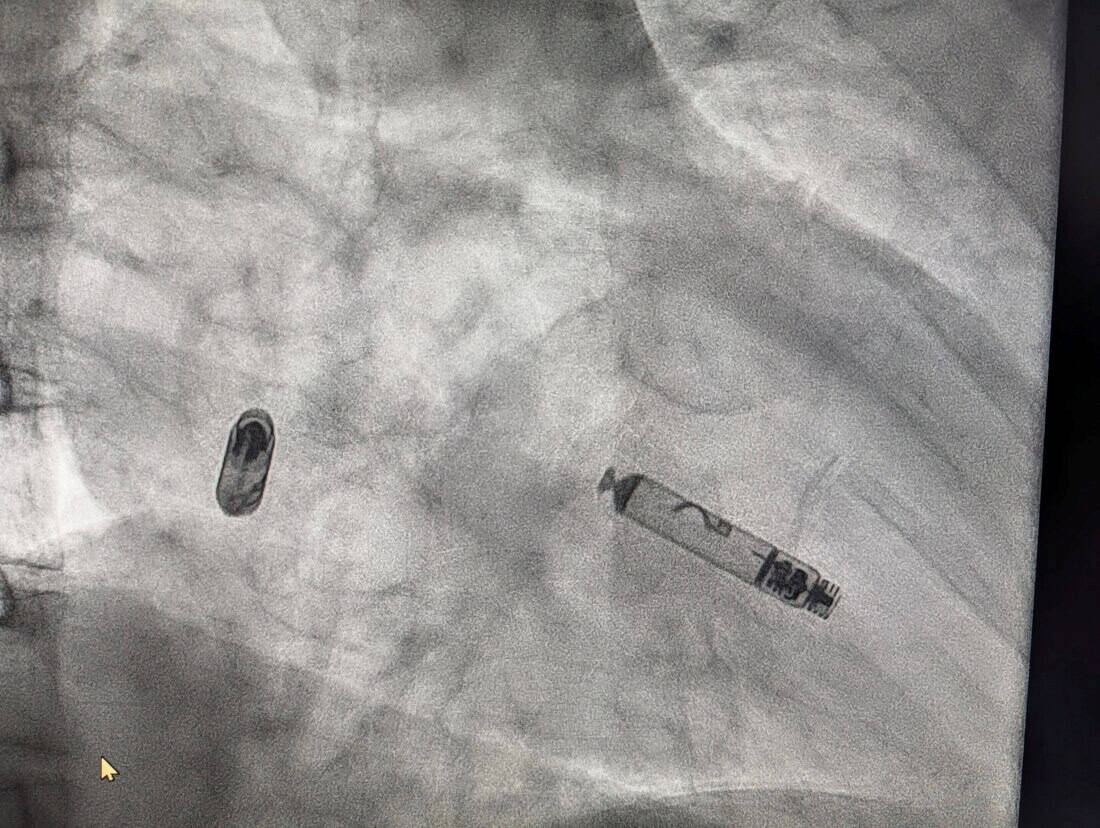
Aveir DR LAO view
What makes the Aveir DR unique
Before Aveir DR, dual-chamber leadless pacing did not exist as a clinical option. Patients who needed AV synchrony — who were not suitable for the accelerometer-based approximation of Micra AV, or who required reliable beat-to-beat AV coordination — had no truly leadless path. Aveir DR changes this. The two devices communicate in real time, timing ventricular pacing precisely to atrial activation, delivering the full haemodynamic benefit of dual-chamber pacing without a single intracardiac lead.
The Leadless Implant — From Admission to Discharge
-
Pre‑procedure
Echocardiogram, renal function, venous evaluation. Detailed counselling on device choice (VR/AV/DR). Anticoagulation review.
-
Day of procedure
Local anaesthesia + sedation. Femoral vein puncture → catheter to RV under fluoroscopy. Device deployed and tested. 30–60 min.
-
Recovery
Bed rest 3–4 hours, then mobilisation. Overnight monitoring. Discharge typically the next day.
-
Discharge
Typically the day after procedure. No chest sutures, no arm restrictions. Small groin puncture heals within days.
-
First Follow‑up
Two weeks after discharge: device interrogation, threshold testing, sensing parameters revie
-
Long-term
Routine follow-up at 3,6,12 months, then annually. Battery longevity ~10–12 years. End-of-life: second leadless device or transition.
Leadless vs Conventional Pacemaker — Side by Side
| Aspect | Conventional | Leadless |
|---|---|---|
| Access | Subclavian / cephalic vein in chest | Femoral vein in groin |
| Generator | Pocket beneath chest skin | None — inside the heart |
| Visible scar | Yes — 4–5 cm chest scar | No chest scar |
| Leads | 1–2 intracardiac leads | No leads |
| Recovery | 2–6 weeks; arm restrictions | 1–2 days; no restrictions |
| Pocket infection risk | Present (elevated in CKD / immunocompromised) | Eliminated |
| MRI | Most devices MRI-conditional | Fully MRI-compatible |
| Battery | 8–12 years | 10–12 years |
| Dual-chamber option | Standard dual-chamber lead system | Aveir DR — two wireless leadless devices |
Three Leadless Devices — Three Different Patients
Leadless pacing has evolved rapidly. There are now three distinct devices serving three distinct patient groups. Choosing the right one requires understanding what each is designed to do.
-
Micra VR (Medtronic)
The original single-chamber leadless pacemaker. Ventricular pacing for patients in atrial fibrillation with slow ventricular response, or those needing only intermittent pacing. Longest clinical experience.
-
Micra AV (Medtronic)
Accelerometer-based AV-synchronous pacing. Senses atrial mechanical activity, delivers synchronized ventricular pacing. For patients with AV block in sinus rhythm — the device that transformed leadless pacing into mainstream therapy.
-
Aveir DR (Abbott)
True dual-chamber leadless system: two devices (atrium + ventricle) that communicate wirelessly. For patients needing full dual-chamber pacing who cannot accept transvenous leads. HRHF Clinic offers Aveir DR as available in India.
Why Micra AV is the Workhorse
For most leadless candidates with intact sinus node function and AV block, Micra AV is the device of choice. The accelerometer-based atrial sensing achieves AV synchrony without a separate atrial lead — providing haemodynamic benefit in a single, contained device. For chronic AF with slow response, Micra VR remains ideal. For true dual-chamber needs, Aveir DR is the option.
Should I Choose a Leadless Pacemaker?
This is the most common question we are asked about leadless pacing — and the honest answer is: it depends on who you are. The leadless pacemaker is a transformative technology for the right patient and an unnecessary one for the wrong patient. Here is the framework we use in our consultations.
A leadless pacemaker is a small device — about the size of a large vitamin capsule — that is implanted directly inside the right ventricle through a catheter inserted in the femoral vein. No chest incision, no generator pocket, no leads to fail. This technology has fundamentally changed pacing in selected patient groups, but it is not the right answer for everyone. Conventional transvenous pacemakers remain appropriate for the majority, and the decision should be made based on clinical situation — not on novelty.
Common Questions About Leadless Pacing
When the device approaches end of battery life — typically after 10 to 12 years — a second leadless device can be implanted alongside the first without removing it. The original device is left in place and becomes encapsulated in heart tissue over time.
No. After implantation, the device anchors itself with small nitinol tines that hook into the heart muscle. Within weeks, heart tissue grows around it. Dislodgement is rare in experienced hands.
Yes. All current leadless pacemakers — Micra and Aveir — are fully MRI-compatible with appropriate device programming before and after.
The two Aveir DR devices — one in the right atrium, one in the right ventricle — communicate wirelessly in real time. The atrial device senses the natural atrial activation and signals the ventricular device to pace at the appropriate moment, replicating the AV coordination of a conventional dual-chamber system.
Performed under local anaesthesia and sedation — you are comfortable throughout. The femoral puncture site is numbed. Most patients find the experience much less uncomfortable than anticipated.
Favourable safety profile in experienced hands. Risks include cardiac perforation (rare), pericardial effusion (rare), femoral access complications (uncommon), and device dislodgement (rare). Leadless eliminates the most common transvenous complications — pocket infection and lead failure.
Yes. A leadless pacemaker can coexist with a separately implanted ICD in patients who need both pacing and defibrillation. The two devices operate independently.
Referring Your Pacemaker Patient for Leadless Evaluation
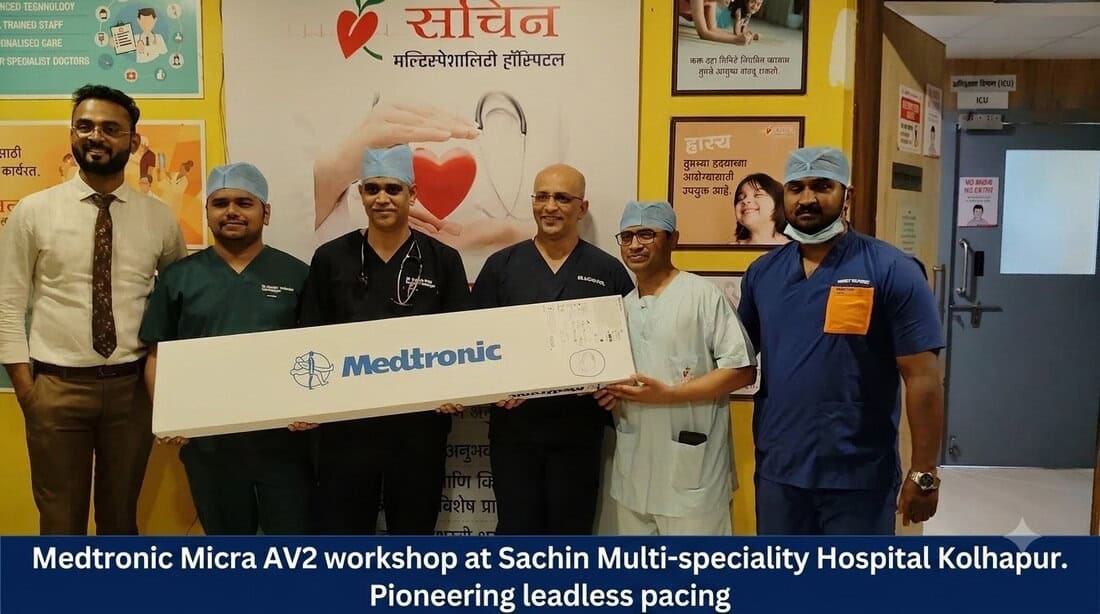
Pacemaker implantation is a high-volume procedure at HRHF Clinic, spanning the full spectrum from conventional pacing to the complete range of leadless devices — Micra VR, Micra AV, and Aveir DR. Dr. Dhopeshwarkar is a Medtronic-certified national proctor for Micra and performs both Micra and Aveir implantation routinely. He has trained implanters at centres across western India as part of his proctoring programme. Same working day acknowledgement of all referrals. Direct access for pre-referral discussion.
-
Dialysis or advanced CKD patients requiring pacing
-
Immunocompromised patient
-
Previous pocket infection or device extraction
-
Difficult or compromised upper venous access
-
Younger patients facing long-term pacing who should avoid leads
-
Patients needing dual-chamber pacing who cannot accept transvenous leads
-
Intermittent pacing needs in chronic AF (Micra VR)
-
Patient preference after thorough research
PROCTORING — HRHF Clinic at Sachin Multi-Speciality Hospital, Kolhapur
Find out if Leadless is the Right Pacemaker for You
An honest evaluation by a Medtronic national proctor — not a sales pitch. We will tell you whether leadless is the better choice for your specific situation, or whether conventional pacing is more appropriate.