
Resources
Empowering you with knowledge — from preparation to recovery. Here you’ll find guides, answers to common questions, and tools to help you navigate your heart health journey
Information You Can Trust
At HRHF Clinic, we believe that an informed patient is an empowered patient. The resources below are designed to complement the personalised care you receive from Dr. Dhopeshwarkar and our team. Please always discuss any questions with us directly — this information is not a substitute for professional medical advice.
Full Procedural Scope
Electrophysiology is a subspecialty that demands both volume and technology. The outcomes your patients achieve depend directly on how many procedures a centre performs, what mapping systems are available, and whether the operating physician is a dedicated EP specialist or a general cardiologist covering multiple disciplines. HRHF Clinic was built around a single commitment: to […]
Fellowship Details
The HRHF Clinic Fellowship in Clinical Cardiac Electrophysiology & Pacing is listed in the Heart Rhythm Society’s global fellowship training repository — one of a very small number of programmes in India to carry this recognition. The Heart Rhythm Society is the world’s leading professional organisation for cardiac electrophysiology, and its fellowship registry is the […]
Explore Resources
-
-
-
-
-
Glossary of Terms
His‑bundle, left bundle branch, and Bachmann bundle pacing. The most physiological pacing approach, preserving natural electrical activation. Over 100 cases performed — the highest volume in western Maharashtra.
-
Lifestyle & Prevention
Cardiac resynchronisation therapy (CRT‑P/D) for heart failure, and implantable cardioverter‑defibrillators (including S‑ICD) for sudden death prevention. Full device programme with intraoperative testing and optimisation.
Full Spectrum of Procedures
Frequently Asked Questions
An EPS is a minimally invasive procedure that maps the electrical activity of your heart. It helps identify the source of arrhythmias and guides treatment (such as ablation). The test is performed under sedation, and you will be monitored closely throughout.
Most patients go home the same day or the next morning. You may feel tired for a few days. Avoid heavy lifting and strenuous activity for about a week. Dr. Dhopeshwarkar will provide specific instructions based on your procedure.
No, you will not feel the pacemaker delivering impulses. It works automatically when needed. Some patients may be aware of the device in the pocket under the skin initially, but most quickly get used to it. Regular follow‑ups ensure it is programmed correctly.
Yes, modern pacemakers are well shielded. Keep your mobile phone at least 15 cm (6 inches) away from the pacemaker — avoid carrying it in a chest pocket. Microwaves, Bluetooth devices, and household appliances are generally safe.
A pacemaker helps maintain a normal heart rate by sending small electrical impulses. An ICD (implantable cardioverter‑defibrillator) can also pace the heart, but its main role is to deliver a shock if a dangerous ventricular arrhythmia occurs, thus preventing sudden cardiac arrest. Some devices combine both functions (CRT‑D).
Bring a list of your current medications, any prior ECG/Holter reports, and a brief summary of your symptoms. Write down any questions you have. If you are a referring doctor, please send clinical details in advance.
-
Need Personal Assistance?
Our team is here to help. If you have questions about any of these resources or need help understanding a specific condition or procedure, please contact us.
Why Cardiologists Refer to HRHF Clinic ?
Electrophysiology is a subspecialty that demands both volume and technology. The outcomes your patients achieve depend directly on how many procedures a centre performs, what mapping systems are available, and whether the operating physician is a dedicated EP specialist or a general cardiologist covering multiple disciplines.
HRHF Clinic was built around a single commitment: to bring the highest standard of EP and Heart Failure care to patients across Western India — and to give referring cardiologists a partner they can trust completely. Dr. Rajesh Dhopeshwarkar has trained at AIIMS New Delhi, holds the FHRS credential, and has spent two decades building one of the highest-volume independent EP programmes in the country.
When you refer to HRHF Clinic, your patient is in the hands of a specialist whose entire practice is built around the condition you are referring for.
Three Commitments to Every Referring Physician
-
Direct Access to Dr. Dhopeshwarkar
Contact Dr. Dhopeshwarkar directly for pre-referral case discussion — before you commit to a referral. We respond within the same working day. Complex cases welcome.
-
Complete Documentation, Every Time
Every referred patient is returned to your care with full procedure notes, device implant records, post-procedure instructions, and a structured follow-up plan — without exception.
-
Your Patient Relationship Is Respected
We are your EP partner. Your patients will receive excellent Arrhythmia care. We send all patients back to their primary Doctor after the treatment is complete
Referral Indications — Full Procedural Scope
We accept referrals for all EP and Heart Failure device indications. The following table summarises our procedural scope and available technology.
| Procedure / Indication | What We Offer | Technology |
|---|---|---|
| Atrial Fibrillation – Paroxysmal & Persistent | Pulmonary vein isolation (PVI), wide area circumferential ablation, posterior wall isolation, touch-up procedures | Carto 3D mapping; PFA |
| Ventricular Tachycardia (VT) Ablation | Scar-based VT, idiopathic VT, VT storm, epicardial access where required | Carto 3D electroanatomic mapping |
| SVT Ablation | AVNRT, AVRT (including WPW), atrial tachycardia, cavotricuspid isthmus flutter | RF ablation; 3D mapping for complex cases |
| Pacemaker Implantation | Single, dual chamber, His bundle pacing, leadless pacing (Micra) | Full device support |
| ICD Implantation | Primary and secondary prevention of sudden cardiac death, S-ICD | Full device support |
| Cardiac Resynchronisation Therapy (CRT) | CRT-P and CRT-D for heart failure with LBBB / wide QRS | Carto guidance available |
| Implantable Loop Recorder (ILR) | Cryptogenic stroke, unexplained syncope, AF monitoring | Medtronic Reveal LINQ / equivalent |
| Electrophysiology Study (EPS) | Diagnostic EPS for unexplained syncope, palpitations, risk stratification | Full EP laboratory |
| Heart Failure Device Assessment | CRT upgrade, device optimisation, lead extraction consultation | Multidisciplinary approach |
How to Refer — Four Simple Steps
We have designed our referral pathway to be as frictionless as possible. Most referrals are confirmed and scheduled within 48 hours.
-
Contact Us Directly
Call +91 96571 38400 or use the referral form below. For complex cases, WhatsApp or call Dr. Dhopeshwarkar directly for a pre-referral case discussion. We do not require a formal letter before initial contact.
-
Share Clinical Summary
Send a brief clinical summary — diagnosis, relevant investigations (ECG, Holter, echo, prior procedure reports), and your clinical question. Email or WhatsApp accepted. We acknowledge all referrals within the same working day.
-
Patient Appointment Confirmed
We contact the patient directly to schedule the consultation or procedure. We keep you informed of the appointment date. For urgent cases, same-week scheduling is routinely available.
-
Full Feedback Report Returned to You
After every consultation and procedure, we send a complete report to the referring physician — including diagnosis, procedure performed, device details where applicable, discharge summary, and follow-up plan. Your patient returns to your ongoing care.
The Technology Behind Better Outcomes
In Electrophysiology, the quality of the mapping system directly influences procedural outcomes. Ablation performed without 3D electroanatomic guidance relies on fluoroscopy alone — increasing radiation exposure, reducing accuracy, and limiting the complexity of cases that can be safely addressed. HRHF Clinic operates with the Carto 3D mapping system at NM Wadia Institute of Cardiology — the global standard for complex ablation. This allows us to take on cases that cannot be done safely without it, including scar-based VT, complex AF, and re-do ablation procedures.
-
Carto 3D Electroanatomic Mapping
Precise 3D reconstruction of cardiac chambers. Real-time catheter visualisation. Lesion tagging and contact force monitoring. Essential for complex AF, VT, and re-do cases.
-
Pulsed Field Ablation (PFA)
Next-generation ablation modality. Tissue-selective energy delivery with reduced risk of oesophageal, phrenic nerve, and pulmonary vein stenosis complications compared to thermal ablation. HRHF Clinic is establishing PFA capability as it becomes available in India.
A Teaching Centre Holds Itself to a Higher Standard
HRHF Clinic runs a structured one-year fellowship in clinical electrophysiology — one of the few dedicated EP training programmes in western India. The existence of this programme means our protocols, documentation standards, and procedural discipline are maintained at an academic benchmark. When you refer to a teaching centre, you refer to a centre that documents everything, follows evidence-based protocols, and is accountable for its outcomes in a way that general clinical practice rarely demands.
Where We Operate
-
Address: C2, Third Floor, Minar Apartments Law College Road, opp. Maruti Showroom Pune, Maharashtra 411004
-
+91 96571 38400
-
cardiologypune@gmail.com
NM Wadia Institute of Cardiology
NM Wadia Institute of Cardiology, Pune — Full EP procedural centre, Carto 3D mapping, AF / VT ablation, device implantation, PFA (coming soon).
+91 96571 38400
Referrals & procedure bookings via Law College Road clinic.
Refer a Patient
Complete the form below and we will contact you within one working day to confirm the referral and schedule the patient's appointment. For urgent cases, please call directly: +91 96571 38400.
Our Approach to Collaboration
HRHF Clinic actively assesses your patient and subsequently delivers effective treatment. That enhances patient trust in the primary Doctor. Our relationship is built on clinical outcomes, communication and trust. We believe that is the only foundation to build on. Please contact Dr. Dhopeshwarkar directly for any queries
Fellowship in Clinical Cardiac Electrophysiology & Pacing
Internationally Recognised Programme
The HRHF Clinic Fellowship in Clinical Cardiac Electrophysiology & Pacing is listed in the Heart Rhythm Society's global fellowship training repository — one of a very small number of programmes in India to carry this recognition. The Heart Rhythm Society is the world's leading professional organisation for cardiac electrophysiology, and its fellowship registry is the international benchmark for EP training programme standards.
Where Our Fellows Come From
The calibre of a training programme is reflected in the doctors it attracts. Every fellow who has trained at HRHF Clinic has been a qualified DM or DNB Cardiologist from a nationally recognised institution — and three of our five fellows have been AIIMS New Delhi graduates.
| Year | Fellow | Qualification | Training Institution |
|---|---|---|---|
| 2022 | Dr. Sampath Kumar | DM Cardiology | AIIMS, New Delhi |
| 2023 | Dr. Sumit Kumar | DM Cardiology | AIIMS, New Delhi |
| 2024 | Dr. Chinmay Parale | DM Cardiology | JIPMER, Pondicherry |
| 2025 | Dr. Avishkar Agrawal | DM Cardiology | AIIMS, New Delhi |
| 2026 (Current) | Dr. Anuja Gadre | DM Cardiology | PGIMER, Chandigarh |
What You Will Train In — Minimum Procedural Numbers
Over the course of twelve months, each fellow assists and progressively performs the following procedures under direct supervision. These are minimum numbers — in practice, fellows at HRHF Clinic routinely exceed them given the centre's procedural volume.
| Procedure Category | Minimum Cases |
|---|---|
| Conventional Electrophysiologic Studies (EPS) & Radiofrequency Ablation | 250 |
| 3D Electroanatomic Mapping & Complex Arrhythmia Ablation (Carto) | 100 |
| Device Implantation — Pacemakers, ICDs, CRT-P/D, Left Bundle Pacing | 100 |
| Total Minimum Procedures | 350+ |
What You Will Train In — Minimum Procedural Numbers
Over the course of twelve months, each fellow assists and progressively performs the following procedures under direct supervision. These are minimum numbers — in practice, fellows at HRHF Clinic routinely exceed them given the centre's procedural volume.
| Procedure Category | Minimum Cases |
|---|---|
| Conventional Electrophysiologic Studies (EPS) & Radiofrequency Ablation | 250 |
| 3D Electroanatomic Mapping & Complex Arrhythmia Ablation (Carto system) | 100 |
| Device Implantation — Pacemakers, ICDs, CRT-P/D, Left Bundle Pacing | 100 |
| Total Minimum Procedures | 350+ |
-
Minimum 350+ unique procedures (actual volumes significantly higher due to centre’s high throughput).
How to Refer — Four Simple Steps
We have designed our referral pathway to be as frictionless as possible. Most referrals are confirmed and scheduled within 48 hours.
-
Contact Us Directly
Call +91 96571 38400 or use the referral form below. For complex cases, WhatsApp or call Dr. Dhopeshwarkar directly for a pre-referral case discussion. We do not require a formal letter before initial contact.
-
Share Clinical Summary
Send a brief clinical summary — diagnosis, relevant investigations (ECG, Holter, echo, prior procedure reports), and your clinical question. Email or WhatsApp accepted. We acknowledge all referrals within the same working day.
/li>
-
Patient Appointment Confirmed
We contact the patient directly to schedule the consultation or procedure. We keep you informed of the appointment date. For urgent cases, same-week scheduling is routinely available.
-
Full Feedback Report Returned to You
After every consultation and procedure, we send a complete report to the referring physician — including diagnosis, procedure performed, device details where applicable, discharge summary, and follow-up plan. Your patient returns to your ongoing care.
How the Year Is Structured
-
Outpatient & Ward
Fellows are integrated into the full clinical workflow: outpatient arrhythmia service, device clinic, pre‑procedure evaluation, patient counselling, post‑procedure assessment, and support to cardiology residents managing arrhythmias in emergencies and inpatients.
-
Cath Lab & Procedural
Progressive supervised training: conventional EPS and ablation, 3D mapping (Carto), pacemaker/ICD/CRT implantation. EP and device procedures at satellite centres across western India give exposure to a diverse patient population.
-
Academic Duties
Weekly presentation of a clinical EP topic — systematic coverage of the full curriculum over twelve months. Research study completion and abstract submission to a national/international meeting. All conference expenses borne by the programme.
-
Logbook & Certification
Formal procedural logbook documenting every case. Certification awarded after competency assessment — not automatically. The certificate is a statement of demonstrated competence, not merely programme completion.
The Fellowship Year — January to December
| Period | Focus & Milestones |
|---|---|
| Jan – Mar | Foundation & Orientation Clinical integration — outpatient clinic, device clinic, ward support. Procedural observation and first assistantships. Weekly academic presentations begin. Logbook initiated. |
| Apr – Jun | Building Procedural Volume Progressive transition to supervised independent procedure performance in conventional EPS and ablation. 3D mapping cases introduced under close supervision. Research project identified and begun. |
| Jul – Sep | Complex Case Exposure 3D mapping and complex ablation — AF, VT, re-do procedures. Device implantation volume builds. Satellite centre visits. Research study data collection. |
| Oct – Nov | Consolidation & Independence Fellow performing procedures with increasing independence. Research study completed and abstract submitted. Competency assessment preparation. |
| December | Competency Assessment & Certification Formal procedural and clinical competency review by programme director. Logbook audit. Fellowship Certificate awarded if competency standards met. Conference presentation if accepted. |
Programme Terms & Support
| Term | Details |
|---|---|
| Duration | One year — 1st January to 31st December |
| Intake | One fellow per year. Candidates who do not meet the required standard are not admitted — maintaining programme quality. |
| Monthly Stipend | ₹75,000 per month |
| Accommodation | Residence provided in a reasonable locality — or ₹15,000 per month rent allowance where applicable |
| Performance Incentives | Additional work‑based incentives may be available |
| Conference Support | Expenses for national or international conference presentation of research project borne by the programme |
| Logbook | Mandatory procedural logbook maintained throughout the year |
| Certification | Fellowship certificate awarded upon successful competency assessment — not automatic on programme completion |
Who Should Apply
Eligibility Criteria
The HRHF Fellowship is open to cardiologists who hold a DM or DNB in Cardiology from an MCI/NMC‑recognised institution. Applicants must be proficient in the fundamentals of cardiology and catheterisation procedures. We are looking for candidates who are serious about building a career in electrophysiology — not those seeking a credential to supplement a general cardiology practice. The programme is intensive, the case exposure is high, and the expectations are those of a future subspecialist.
Selection Process
Selection is based on a written MCQ examination and a personal interview with Dr. Dhopeshwarkar. Candidates are assessed on clinical knowledge, procedural aptitude, and — critically — patient care ethic and professional conduct. If no applicant meets the required standard in a given cycle, no fellow is appointed. This is not a formality: it has been applied.
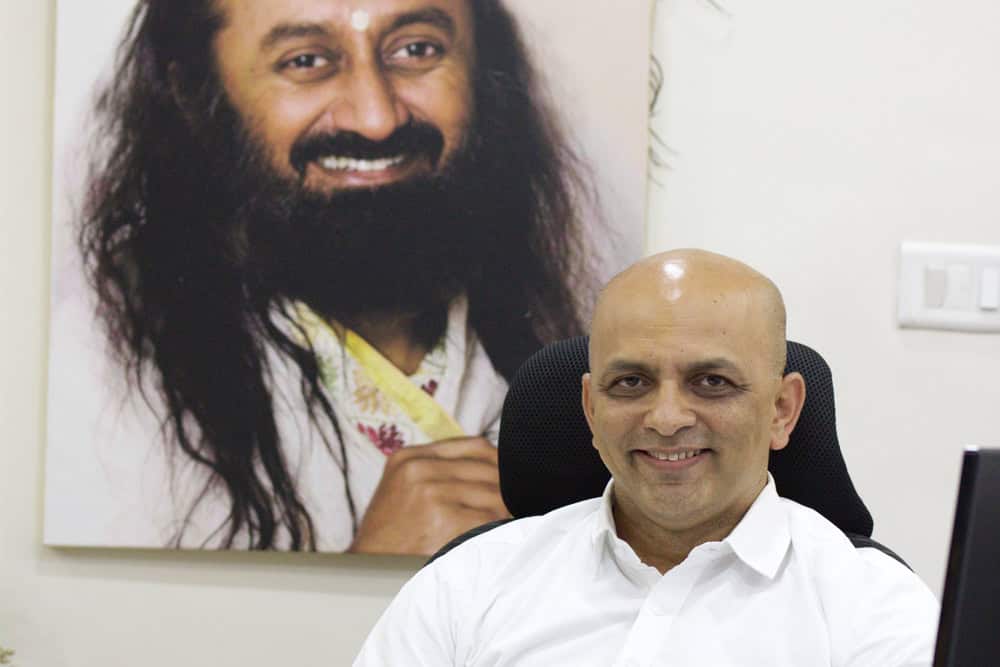
Your Supervisor — Dr. Rajesh Dhopeshwarkar
Dr. Rajesh Dhopeshwarkar is the Programme Director and primary supervising physician for all HRHF fellows. He completed his DM in Cardiology at AIIMS New Delhi and subsequently trained in Clinical Cardiac Electrophysiology, Heart Failure Device Implants, and Coronary Interventions at the University of Toronto, Canada. He holds the FHRS (Fellow of the Heart Rhythm Society) and CEPS credentials — the latter recognising certified competence in cardiac electrophysiology pacing — and has practised as a dedicated electrophysiologist in Pune for over two decades. Fellows train directly alongside Dr. Dhopeshwarkar. There are no intermediary supervisors, no delegation to junior staff, and no ambiguity about who is responsible for your training.
MD DM Cardiology (AIIMS, New Delhi) FHRS CEPS Fellowship — University of Toronto (EP, Heart Failure Devices, Coronary Interventions)
Apply for the 2027 Fellowship
Applications for the 2027 intake (commencing 1st January 2027) are now open. Complete the form below — shortlisted candidates will be contacted for the written examination and interview.
Questions About the Programme?
For informal enquiries about the fellowship — programme structure, case volumes, or the selection process — contact Dr. Dhopeshwarkar directly.
-
cardiologypune@gmail.com
-
+91 96571 38400
Experience the Difference
Whether you are a patient seeking advanced care or a referring doctor looking for a trusted partner, we welcome your enquiry.