
Atrial Fibrillation Ablation at HRHF Clinic
Western India's largest AF ablation programme — RF ablation with vHPSD and QDot technology, Cryoablation, and Pulsed Field Ablation. Every modality. One centre. One specialist.
Largest series of AF ablation procedures in western India
Dr. Dhopeshwarkar has been performing AF ablation for over fifteen years — with volume and outcomes that place this programme among the leading independent EP centres in the country.
Understanding Atrial Fibrillation
Atrial fibrillation — AF — is the most common sustained heart rhythm disorder. In AF, the upper chambers of the heart fire electrical signals chaotically instead of in a coordinated rhythm. The result is an irregular, often fast heartbeat that the patient feels as palpitations, breathlessness, fatigue, or dizziness. AF is not merely a nuisance. Untreated AF significantly increases the risk of stroke — because the chaotic rhythm allows blood to pool and clot in the heart. It also causes progressive deterioration of heart function over time, particularly if the heart rate remains poorly controlled.
Common AF Symptoms
-
Palpitations — irregular, rapid heartbeat
-
Breathlessness on exertion or at rest
-
Fatigue and reduced exercise tolerance
-
Dizziness or light-headedness
-
Chest discomfort or pressure
-
Some patients have no symptoms at all
Why AF Matters
-
5× increased risk of stroke
-
Progressive deterioration of heart function
-
Risk of heart failure with long-term uncontrolled AF
-
Dizziness or light-headedness
-
Reduced quality of life and exercise capacity
-
Cognitive decline — emerging evidence
The good news is that AF is treatable — and in the right patient, catheter ablation offers the best chance of restoring and maintaining normal rhythm for the long term.
Medicines vs Ablation — What is the Difference?
Medicines for AF fall into two categories — rate control, which slows the heart down without addressing the rhythm; and rhythm control, which attempts to maintain sinus rhythm using anti-arrhythmic drugs. Both have limitations. Rate control medicines do not restore normal rhythm. Rhythm control medicines are moderately effective but carry side effects, and they do not work well long term for many patients.
Catheter ablation addresses the cause of AF directly. The triggers for AF in most patients arise from electrical signals firing abnormally from the pulmonary veins — the four veins that connect the lungs to the left atrium. Ablation electrically isolates these veins from the rest of the atrium, eliminating the source of the abnormal signals. This is called pulmonary vein isolation (PVI).
Three Technologies. One Programme. The Right Choice for Each Patient.
HRHF Clinic offers the complete range of AF ablation modalities — RF ablation using vHPSD with QDot, Cryoablation, and Pulsed Field Ablation. No single technology is right for every patient. The choice is made based on AF type, anatomy, prior procedures, and individual clinical factors.
-
Pulsed Field Ablation
Non-thermal, tissue-selective energy that ablates cardiac muscle while sparing the oesophagus, phrenic nerve, and pulmonary veins. Varipulse system with Carto 3. Faster procedure time, excellent safety profile. Western India's largest PFA experience.
✦ HRHF PRIMARY — VARIPULSE + CARTO 3 -
RF Ablation — vHPSD with QDot
Very high power short duration (90W/4s) with Thermocool SmartTouch QDot catheter. Contact force + temp-controlled delivery for precise, consistent lesions. Standard approach for majority of AF ablation procedures.
-
Cryoablation
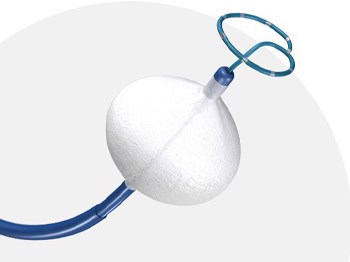
Freezing energy using Arctic Front Advance cryoballoon. Excellent for paroxysmal AF with consistent circumferential isolation, favourable safety profile, and strong long-term outcomes. Selected for appropriate patients as a first-line option.
Pulsed Field Ablation — The Most Significant Advance in AF Ablation in a Decade
Pulsed Field Ablation uses brief, precisely calibrated electrical pulses — pulsed electric fields — that selectively destroy cardiac muscle cells while leaving surrounding structures intact. Cardiac muscle cells are uniquely sensitive to pulsed electric fields; the oesophagus, phrenic nerve, and pulmonary veins are largely spared. The result is more reliable ablation of the target tissue with significantly reduced risk of collateral injury.
At HRHF Clinic, PFA is performed using the Varipulse system — Biosense Webster's PFA platform — with full Carto 3 electroanatomic mapping integration. Every PFA procedure benefits from real-time 3D anatomical reconstruction of the left atrium, precise catheter navigation, and complete contact information. The procedure is significantly faster than conventional RF ablation and is now our primary approach for AF ablation.
What this means for you as a patient:
Western India’s Largest PFA Experience
HRHF Clinic was among the first centres in western India to adopt Pulsed Field Ablation. Our experience — the largest in the region — with the Varipulse system reflects the same commitment to adopting best-in-class technology that has defined this programme since its inception.
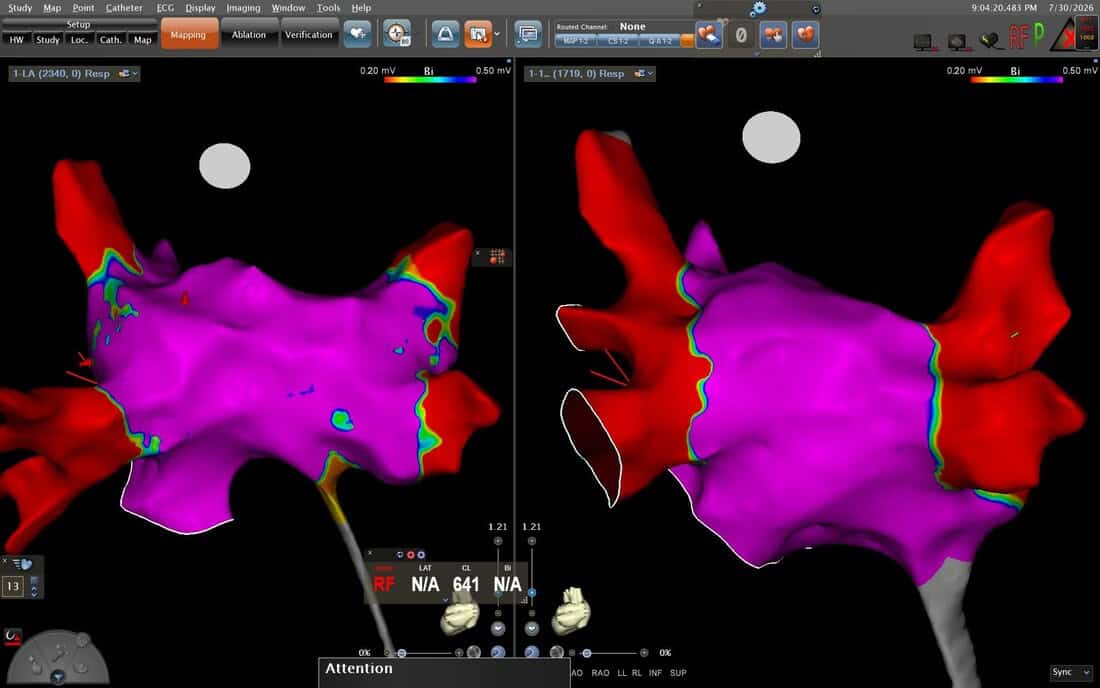
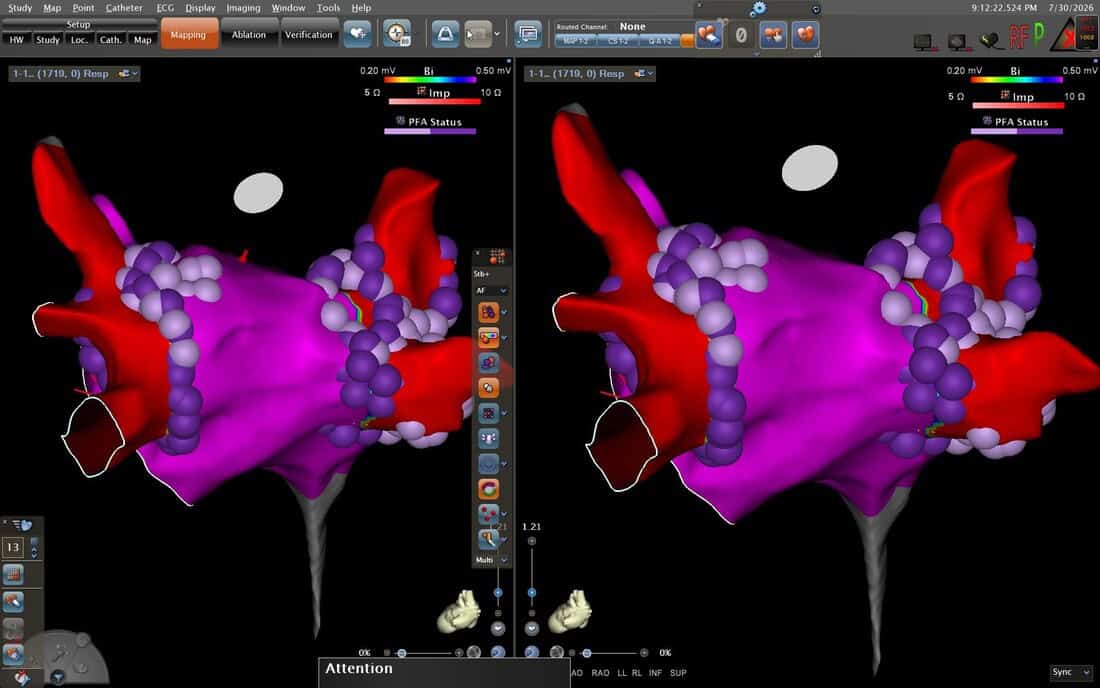
PFA Case in Focus — 50-Year-Old Male, Paroxysmal AF
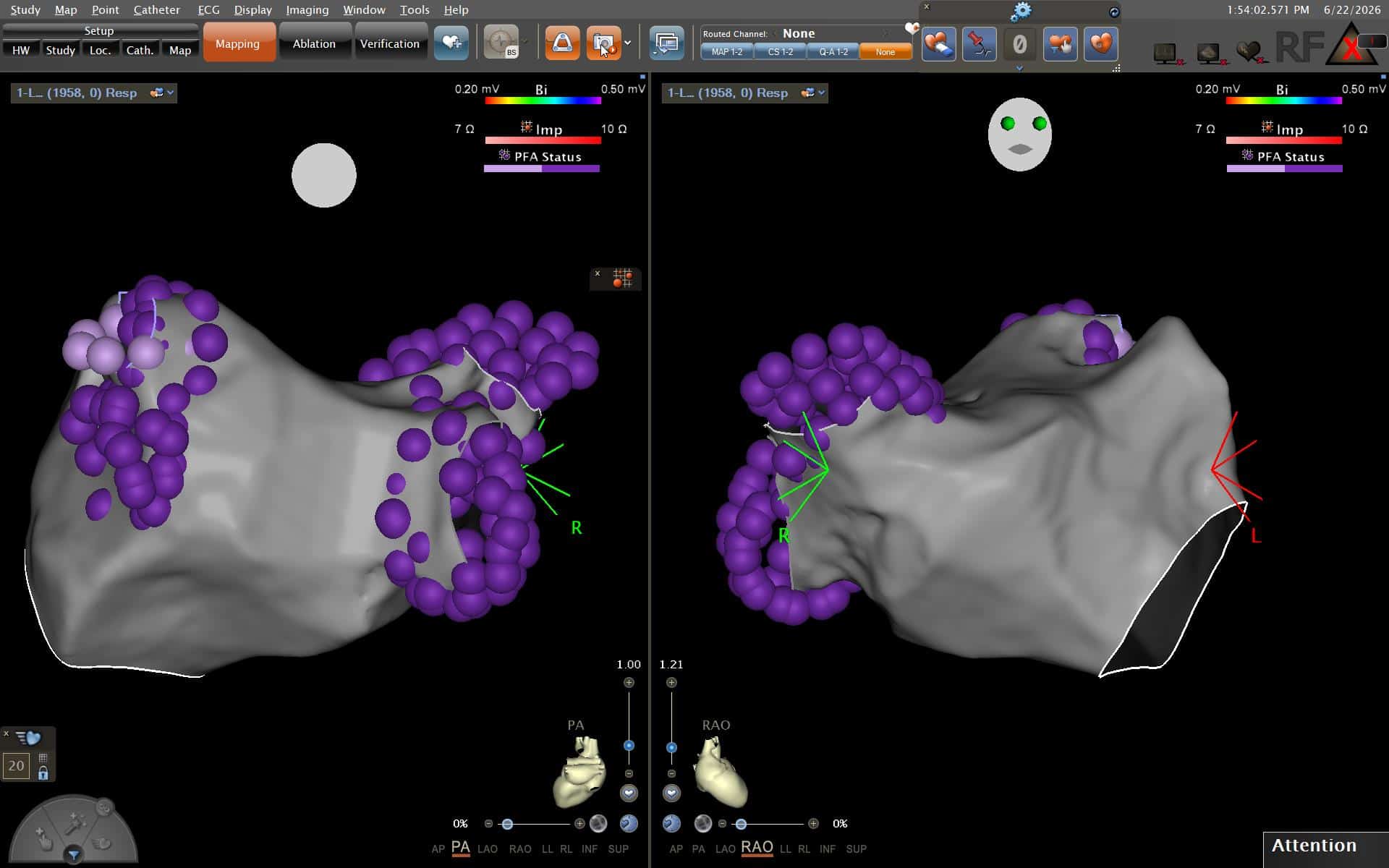
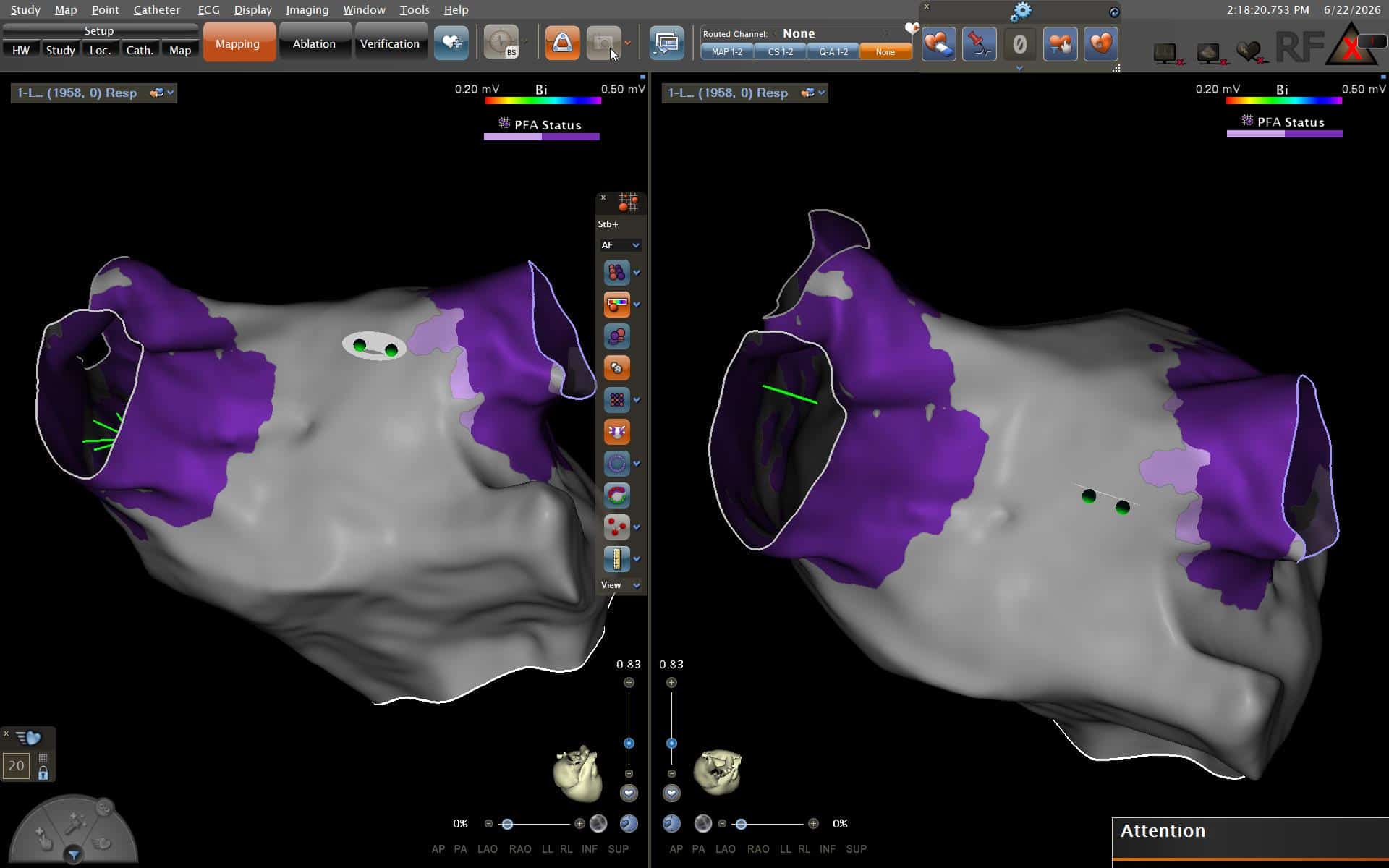
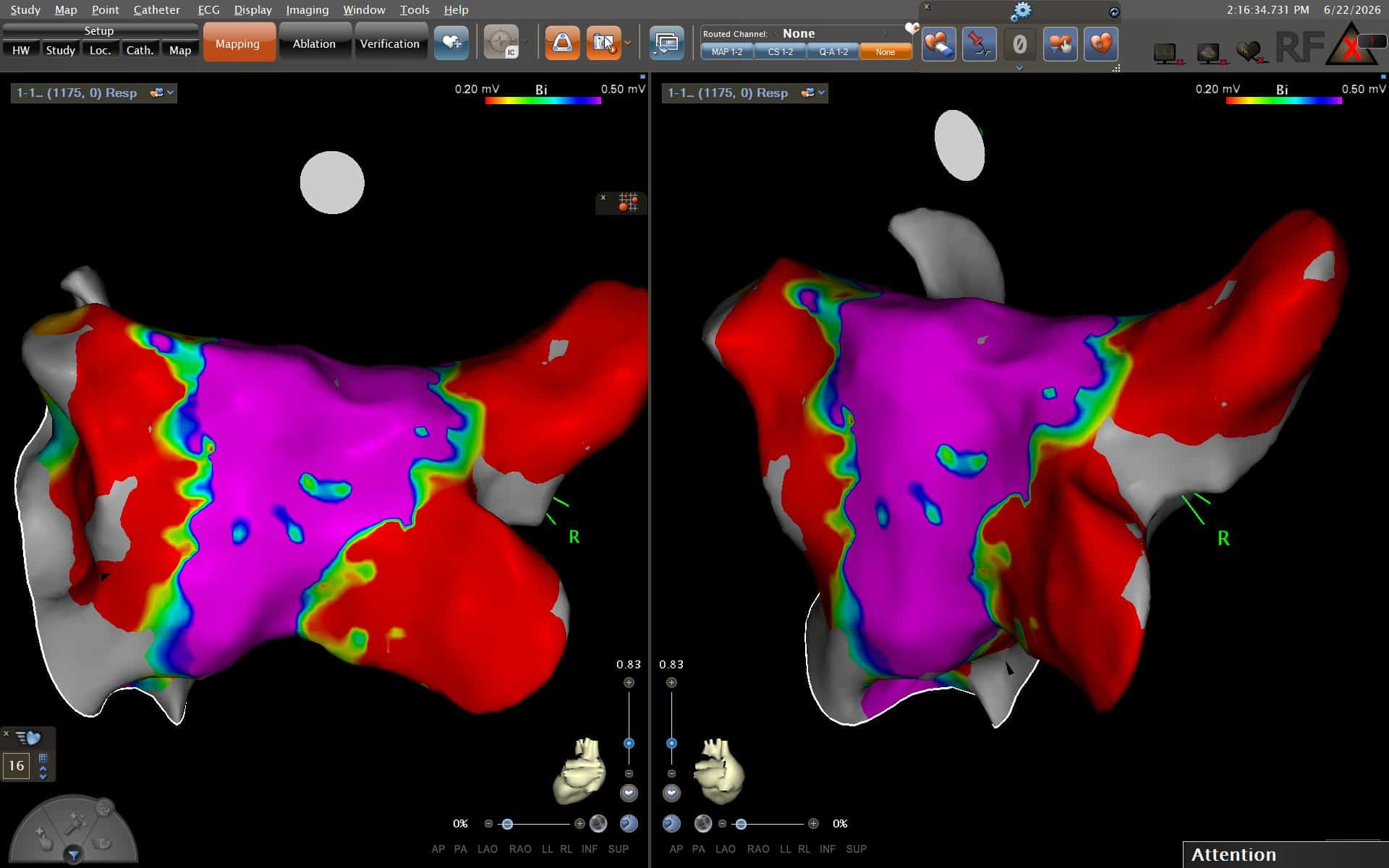
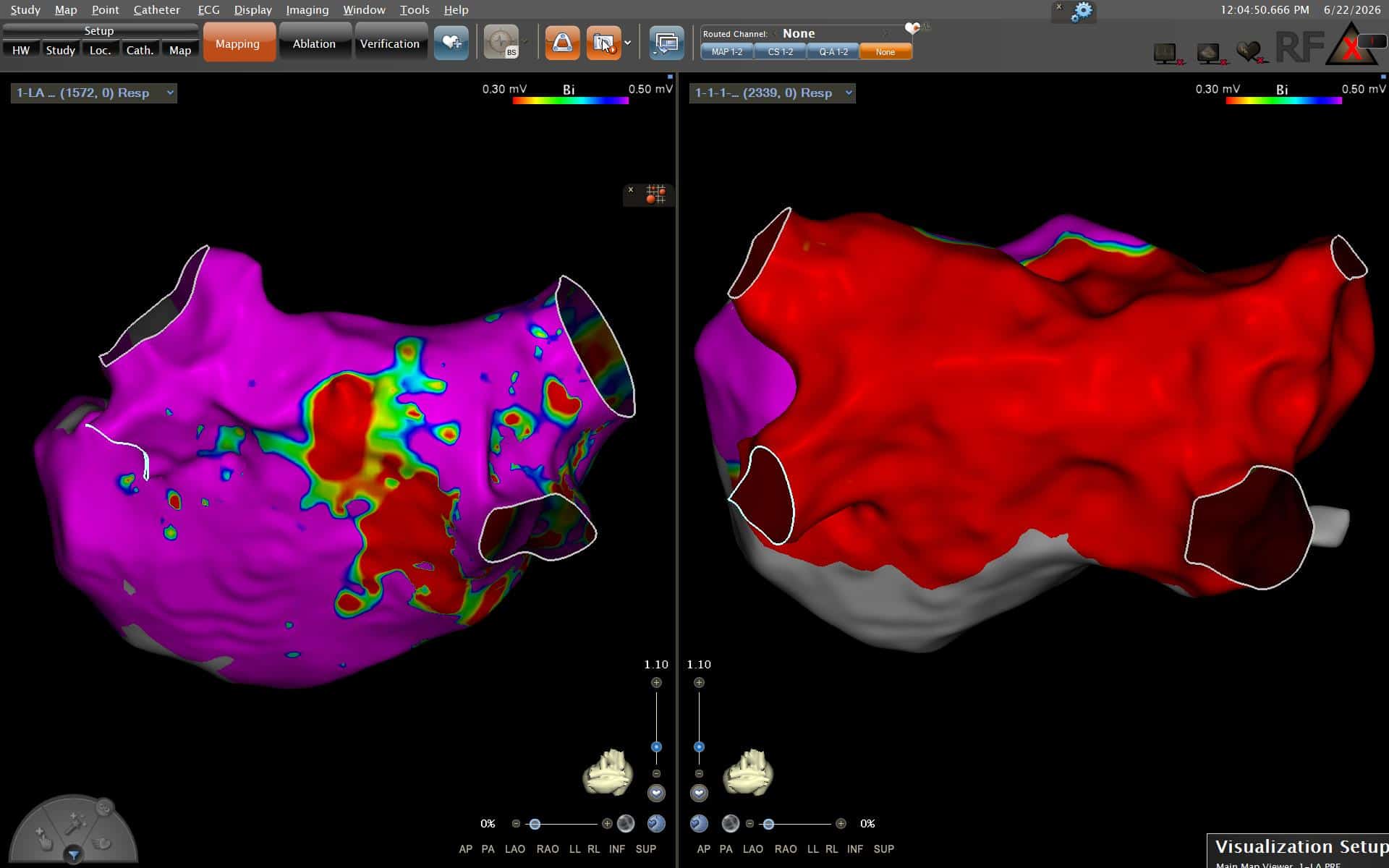
Paroxysmal AF — Varipulse PFA with Carto 3, HRHF Clinic
A 50-year-old male with symptomatic paroxysmal AF underwent PFA at HRHF Clinic using the Varipulse system. High-density pre-ablation mapping with 2340 points defined the left atrial anatomy precisely on Carto 3. Varipulse PFA was then delivered circumferentially around all four pulmonary veins — the characteristic cluster of lesion tags visible on the post-ablation map showing complete pulmonary vein isolation. Procedure completed efficiently, without thermal ablation of any adjacent structure.
Very High Power Short Duration RF Ablation — Precision and Consistency
For complex AF cases, re-do procedures, and patients where point-by-point ablation provides the most precise substrate targeting, HRHF Clinic performs RF ablation using the vHPSD technique — very high power, short duration energy delivery — with the Thermocool SmartTouch QDot catheter.
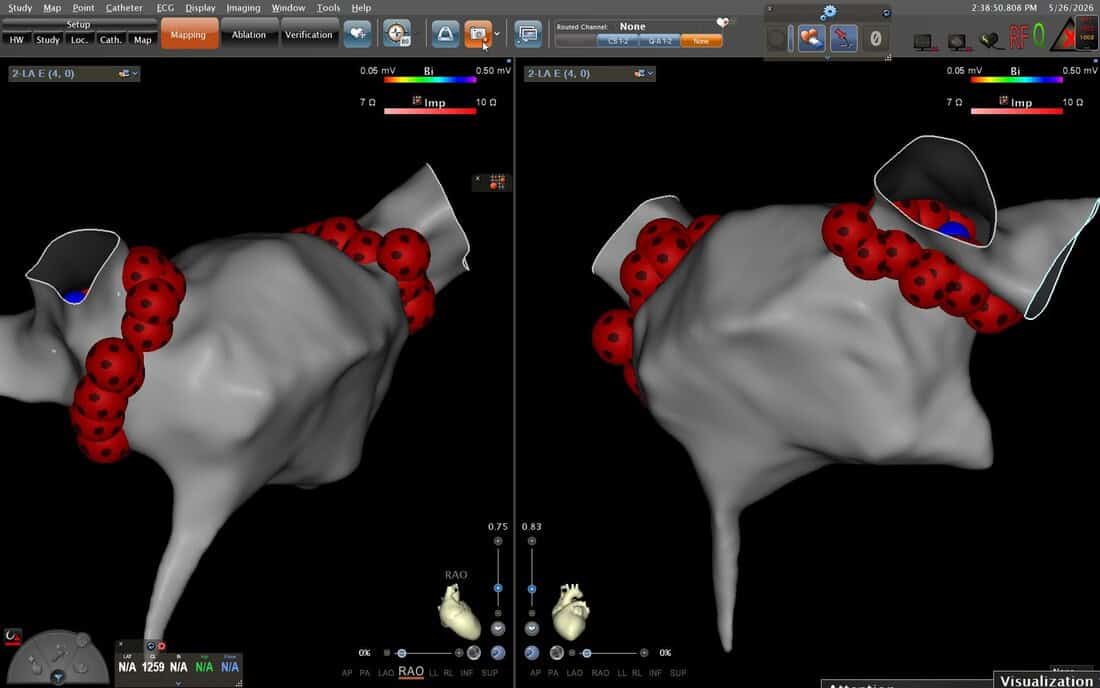
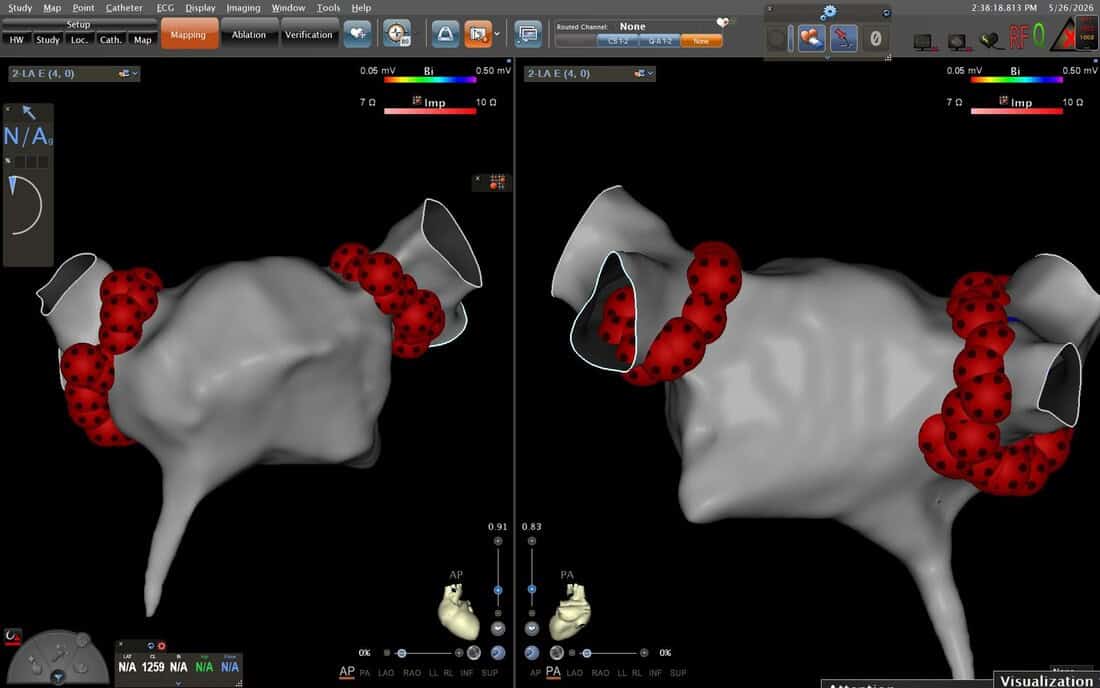
vHPSD delivers energy at 90 watts for just 4 seconds per point. The lesions are more consistent, the procedure is faster, and the risk of collateral heating is reduced compared with conventional RF ablation. The QDot catheter measures the exact contact force with which the catheter tip touches the heart wall in real time — confirming tissue contact at every ablation point. The full four-projection Carto 3 lesion set shown below demonstrates what a complete circumferential pulmonary vein isolation looks like using vHPSD and QDot at HRHF Clinic.
Complete Circumferential PVI — vHPSD 90W/4s with QDot, HRHF Clinic
Four standard projections — RAO, LAO, AP, and PA — showing the complete vHPSD QDot RF ablation lesion set encircling both pairs of pulmonary veins. The dense red VisiTag spheres represent point-by-point RF deliveries at 90W for 4 seconds each, with real-time contact force confirmation via the QDot catheter. The continuous circumferential encirclement visible in all four projections confirms complete pulmonary vein isolation with no gaps. Published four-projection imaging of a complete PVI is rare — this is the standard we hold every AF ablation to at HRHF Clinic.
Cryoablation — First-Line for Paroxysmal AF
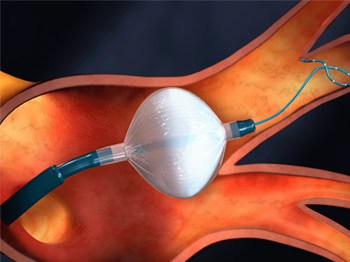
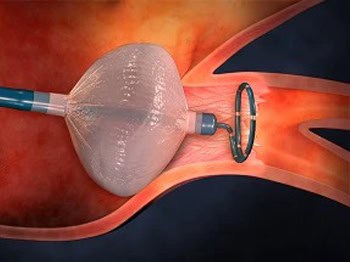
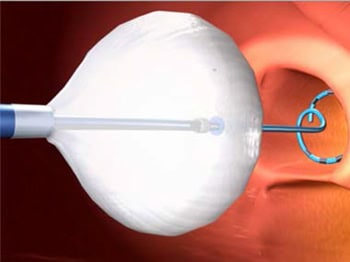
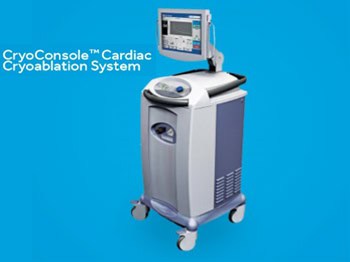
Cryoablation uses extreme cold rather than heat to create the ablation lesion. A balloon catheter is advanced to each pulmonary vein opening and inflated to occlude the vein. Freezing energy is then delivered, creating a circumferential scar around the vein that electrically isolates it from the rest of the heart.
For paroxysmal AF — AF that starts and stops on its own — cryoablation is an excellent first-line choice. The balloon-based approach provides consistent, circumferential isolation of the pulmonary veins in a single freeze per vein. Long-term outcomes in paroxysmal AF are well established across large international trials. At HRHF Clinic, cryoablation is selected for appropriate paroxysmal AF patients based on pulmonary vein anatomy and individual clinical factors discussed during consultation.
Cryoablation Advantages
-
Consistent circumferential PV isolation
-
Single freeze per vein — efficient procedure
-
Favourable safety profile
-
Strong long-term outcome data in paroxysmal AF
-
Excellent for typical pulmonary vein anatomy
Best Suited For
-
Paroxysmal AF — first presentation
-
Paroxysmal AF — failed anti-arrhythmic drugs
-
Patients with normal or typical PV anatomy
-
Younger patients with symptomatic paroxysmal AF
-
Patients preferring a balloon-based approach
Referring Your AF Patient to HRHF Clinic
HRHF Clinic accepts referrals for AF ablation from across Maharashtra, Goa, Gujarat, and Madhya Pradesh. All procedures are performed personally by Dr. Rajesh Dhopeshwarkar — DM Cardiology (AIIMS), FHRS, CEPS — with over fifteen years of AF ablation experience and the largest series in western India. We offer the complete range of ablation modalities and select the appropriate technique based on the individual patient’s AF type, anatomy, comorbidities, and prior treatment history.
Refer for Ablation Evaluation
-
Symptomatic paroxysmal/persistent AF failing ≥1 AAD
-
Paroxysmal AF — ablation as first-line (guideline supported)
-
Persistent AF with preserved or mildly reduced EF
-
AF with tachycardia-mediated cardiomyopathy
-
Re-do ablation — failed prior PVI at another centre
-
AF with intolerance to anti-arrhythmic drugs
Consider Early Referral
-
Young patient with first-presentation symptomatic AF
-
AF with reduced EF — tachycardia-mediated component suspected
-
Athlete’s AF
-
Newly diagnosed persistent AF — before cardioversion
-
AF with intolerance to anti-arrhythmic drugs
-
Patient asking specifically about ablation options
What is PFA and how is it different from RF ablation?
Most AF ablation procedures at HRHF Clinic take 2 to 3 hours. Pulsed Field and Cryoablation is typically at the shorter end of this range. Complex cases or re-do procedures may take longer.
You will receive sedation — you will be comfortable and largely unaware of the procedure. General anaesthesia may be required for AF ablation.
AF ablation has a favourable safety profile in experienced hands. Main risks include vascular access complications, cardiac tamponade (rare), oesophageal injury (rare with vHPSD), and stroke (rare). All risks are discussed in detail pre-procedure.
Ablation significantly reduces AF burden in the majority but does not guarantee permanent cure in all cases. Some patients may require a second procedure. Long-term freedom from AF is higher with ablation than with anti-arrhythmic drugs.
Specific instructions will be given at your pre-procedure consultation. Anti-arrhythmic drugs are typically stopped before ablation; blood thinners are generally continued.
Ready to discuss AF ablation for your patient — or for yourself?
An honest evaluation by a Medtronic national proctor — not a sales pitch. We will tell you whether leadless is the better choice for your specific situation, or whether conventional pacing is more appropriate.